 Article Writer
Namibia is one of Africa’s most compelling investment stories. It is politically stable. Its governance is transparent. And its natural resource base spans diamonds, uranium, critical minerals, offshore oil, and one of the world’s most spectacular tourism landscapes. Most importantly, Namibia is actively transforming from a raw commodity exporter into a diversified, processing-driven economy that welcomes and rewards foreign capital.
In 2025, Namibia ranked first in Africa and second globally in the Greenfield Foreign Direct Investment Performance Index. FDI inflows reached USD 2.61 billion in 2023, nearly two and a half times the previous year’s figure. These numbers reflect a market that the world’s most sophisticated investors are already moving into. The question is whether you will be among the early movers.
At YES! Invest Africa, we connect global investors with Namibia’s highest-potential sectors. Every opportunity we facilitate is structured for legal security, sustainable returns, and genuine contribution to Namibia’s long-term economic development.
Why Invest in Namibia Today
Political Stability and World-Class Governance
Namibia consistently ranks among Africa’s best-governed nations. Since gaining independence in 1990, it has maintained uninterrupted democratic governance, peaceful electoral transitions, and strong rule of law. Its legal system, based on a robust constitution, provides reliable contract enforcement and transparent dispute resolution that foreign investors trust.
Furthermore, Namibia allows 100% foreign ownership in most sectors. It imposes no restrictions on capital repatriation. And its investment protection framework is among the most comprehensive in Sub-Saharan Africa. For investors accustomed to navigating complex ownership restrictions in other African markets, Namibia’s openness is immediately compelling.
The World Bank recognizes Namibia as one of Southern Africa’s most reliable business environments, noting consistent progress in regulatory quality, investor protection, and infrastructure development.
A Strategic Gateway to Southern and Central Africa
Namibia’s geographic position creates a powerful logistics advantage. The Walvis Bay Port on the Atlantic Ocean is one of the most efficiently operated ports in Sub-Saharan Africa. It connects Namibia directly to landlocked markets including Botswana, Zambia, Zimbabwe, and the DRC through the Walvis Bay Corridor road and rail network.
As a member of the Southern African Development Community (SADC) and the Southern African Customs Union (SACU), Namibia offers investors preferential market access across a regional bloc of over 345 million consumers. Additionally, Namibia’s membership in the African Continental Free Trade Area (AfCFTA) opens access to the broader 1.5 billion-person continental market under progressively liberalizing trade terms.
For manufacturing and logistics investors specifically, Walvis Bay represents Africa’s most underutilized Atlantic gateway, with exceptional potential to serve as a regional distribution hub as Southern African trade volumes grow.
Key Investment Sectors in Namibia
Mining: Diamonds, Uranium, and Critical Minerals
Namibia is a global mining powerhouse. It is among the world’s top producers of diamonds, uranium, zinc, and lead. Additionally, its mineral portfolio is expanding rapidly to include lithium, rare earth elements, and other critical minerals that the global clean energy transition urgently needs.
The diamond sector, dominated by the Namibia Diamond Trading Company’s partnership with De Beers, generates substantial revenue and is increasingly investing in local cutting and polishing capacity to retain the gem manufacturing margin domestically. For investors, opportunities exist in value-added diamond processing alongside exploration and production in newly licensed concession areas.
Uranium is equally significant. Namibia’s Rössing mine is one of the world’s longest-operating uranium mines. As nuclear energy regains global attention as a low-carbon power source, Namibia’s uranium sector is experiencing renewed investment interest. According to the International Energy Agency (IEA), nuclear power is increasingly recognized as essential to achieving net-zero targets, supporting long-term structural demand for Namibian uranium.
Critical Minerals and Green Technology Supply Chains
Lithium and Rare Earths for the Energy Transition
Namibia’s emerging critical minerals sector is attracting significant international investor attention. Lithium deposits in the Karibib area and rare earth element deposits across the country align directly with global demand driven by electric vehicle batteries, wind turbines, and energy storage systems.
The African Development Bank (AfDB) actively supports Namibia’s critical minerals development, recognizing the country’s potential as a reliable, ESG-compliant supplier for European and Asian clean energy supply chains. Investors who establish processing and refining capacity for these minerals position themselves at the most valuable stage of the supply chain. Furthermore, they align with Namibia’s government mandate to move beyond raw mineral export toward domestic value addition.
Renewable Energy and Green Hydrogen
Namibia is positioning itself as Africa’s leading hub for clean energy. The country receives exceptional solar irradiance and consistent Atlantic coastal wind resources. Together, these conditions make Namibia one of the most cost-competitive locations for utility-scale renewable energy generation on the continent.
Most significantly, Namibia is developing a world-class green hydrogen sector. Its Hyphen Hydrogen Energy project in the southern Tsau Khaeb National Park is one of the largest green hydrogen developments in Africa, targeting export of green ammonia and hydrogen to European markets. This project, combined with Africa’s first green iron production plant at HyIron Oshivela, signals Namibia’s ambition to become a regional leader in clean industrial production.
For energy investors, Namibia offers power purchase agreements with government-backed offtake, strong renewable resource quality, and a regulatory environment that actively incentivizes clean energy development.
Tourism and Eco-Hospitality
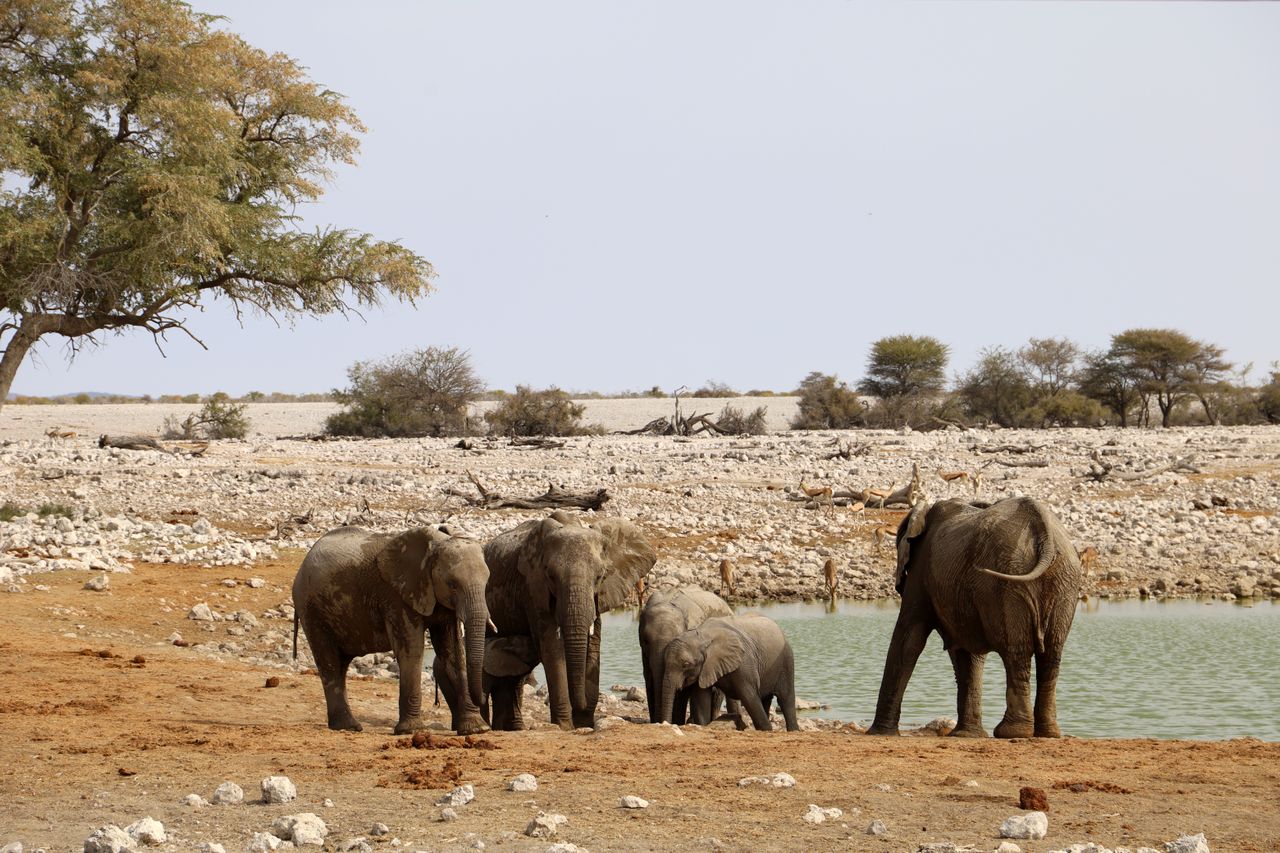
Namibia’s tourism sector is a world-class investment opportunity. The country’s landscapes are extraordinary. The Namib Desert, the world’s oldest desert, runs for over 2,000 kilometers along the Atlantic coast. Etosha National Park hosts one of Africa’s largest wildlife concentrations. Fish River Canyon is the second-largest canyon on Earth. And the NamibRand Nature Reserve holds the first African site to receive International Dark Sky Association certification.
Namibia welcomed 863,872 international visitors in 2023, representing an 87.4% increase from 2022. Tourism contributed 6.9% to GDP in 2023, generating USD 348 million in international receipts. The government actively supports investment in luxury eco-lodges, adventure tourism facilities, cultural tourism villages, and a growing Meetings, Incentives, Conferences, and Events sector.
Eco-Tourism and MICE Investment Opportunity
For hospitality investors, Namibia offers a market where demand is recovering strongly after COVID disruption, where supply of quality accommodation remains insufficient relative to visitor growth, and where government policy actively supports sustainable tourism development. This combination creates favorable conditions for new hospitality investment across the eco-tourism, luxury safari, and business travel segments.
Agriculture and Agribusiness
Agriculture employs close to 70% of Namibia’s population and provides the foundation for significant agribusiness investment. The livestock sector is particularly strong. Namibia exports high-quality Namibian beef to the European Union under preferential access agreements, creating a premium export market for investors in cattle production, feedlots, and meat processing.
Beyond livestock, horticulture offers strong potential. Grapes, olives, dates, and cut flowers are all commercially viable in Namibia’s diverse climate zones. Furthermore, marine aquaculture and fishing along the Benguela Current-fed Namibian coast support one of Africa’s most productive fisheries industries, with significant investment potential in processing and value-added seafood manufacturing.
The Food and Agriculture Organization (FAO) identifies Namibia’s agro-processing and fisheries sectors as priority investment areas, specifically highlighting value chain development as the highest-return category for agricultural investors.
Infrastructure and Logistics
Walvis Bay Port expansion and the broader Walvis Bay Corridor infrastructure program are transforming Namibia’s logistics investment landscape. Industrial parks adjacent to Walvis Bay, logistics facilities serving the corridor trade routes, and urban commercial real estate in Windhoek are all active investment categories with strong demand fundamentals.
Additionally, Namibia’s government actively seeks private partners for public-private partnership infrastructure projects. Road maintenance concessions, water supply investments, and affordable housing developments all offer stable, long-term returns from infrastructure assets in a country where public sector fiscal constraints create clear space for private capital participation.
How YES! Invest Africa Supports Investors in Namibia
Structured, Secure Market Entry
At YES! Invest Africa, we provide international investors with a complete and legally secure pathway into Namibia’s most compelling opportunities. Specifically, our facilitation service covers:
- Sector opportunity assessment matched to your capital size, return objectives, and ESG requirements
- Regulatory guidance on Namibia’s foreign ownership framework, sectoral licensing, and investment incentive eligibility
- Legal due diligence covering all counterparty relationships, land and asset documentation, and contract structures
- Local partner identification connecting foreign investors with vetted Namibian business partners
- Post-investment operational support ensuring ongoing compliance and performance monitoring
All investments are structured under enforceable contracts aligned with Namibian investment law, applicable bilateral investment treaties, and OECD Guidelines for Multinational Enterprises, providing robust legal protection across all risk dimensions.
Frequently Asked Questions (FAQ)
- Why does Namibia rank so highly for foreign direct investment compared to other African markets?
Namibia combines several factors that are rarely found together in a single African market: 100% foreign ownership in most sectors, unrestricted capital repatriation, transparent governance, reliable contract enforcement, world-class port infrastructure at Walvis Bay, and a resource base spanning diamonds, uranium, critical minerals, renewable energy, and premium tourism assets. Its 2025 ranking as first in Africa in the Greenfield FDI Performance Index reflects the cumulative strength of these fundamentals in the eyes of sophisticated global investors.
- What is the green hydrogen opportunity in Namibia and why does it matter to investors?
Namibia’s green hydrogen sector is one of the most significant clean energy investment developments in Africa. The country’s exceptional solar and wind resources enable production of green hydrogen and green ammonia at globally competitive costs. The Hyphen Hydrogen project targets large-scale export to European markets that are urgently seeking clean fuel alternatives. For investors, green hydrogen offers exposure to a structurally growing global market, government-backed project frameworks, and positioning in a sector that will define the next generation of energy trade between Africa and Europe.
- What makes Namibia’s tourism sector a strong investment opportunity right now?
Namibia’s tourism sector is in a strong recovery phase, with international visitor numbers growing by 87.4% in 2023. Quality accommodation supply remains insufficient relative to growing demand, creating a favorable gap for new hospitality investment. The government actively supports sustainable tourism development through dedicated incentives and a National Convention Bureau that is positioning Namibia as a MICE destination. Early investors in eco-lodges, adventure tourism, and business travel facilities will capture the strongest market positions as visitor numbers continue to grow.
- How does Namibia’s agricultural sector differ from other Southern African investment markets?
Namibia’s agricultural investment case is distinctive for several reasons. EU market access for Namibian beef under preferential trade agreements creates a premium export channel for livestock investors. The Benguela Current fisheries system along the Namibian coast is one of the world’s most productive, generating significant seafood processing investment potential. Horticulture for European export markets is commercially viable across multiple climate zones. And government support for agro-processing investment directly incentivizes value addition over raw commodity export.
- What legal protections does YES! Invest Africa provide for investors entering Namibia?
YES! Invest Africa structures all Namibia investments through enforceable contracts compliant with Namibian investment law, SACU and SADC regional investment frameworks, and OECD multinational enterprise guidelines. Our pre-investment due diligence covers regulatory compliance, counterparty verification, land and asset documentation, and community engagement protocols. All contracts include international arbitration provisions providing enforceable dispute resolution independent of domestic judicial process variability.
Invest in Namibia — Africa’s Rising Investment Champion
Namibia is no longer a hidden gem. Global investors are already moving in. FDI is surging. Green hydrogen projects are breaking ground. Critical mineral exploration is accelerating. And Walvis Bay is cementing its position as Southern Africa’s premier Atlantic gateway.
The investors who establish positions in Namibia now will secure the best project allocations, the strongest partner relationships, and the most favorable entry terms before the full weight of institutional capital arrives.
Connect with YES! Invest Africa today for a free, confidential consultation. Our Southern Africa advisory team will match your investment objectives, capital parameters, and sector interests with the right Namibia opportunity, structured for legal security, strong returns, and lasting community impact.
Book Your Free Consultation — Invest in Namibia with Confidence