 Article Writer
Africa holds roughly a fifth of the world’s population, yet it attracts only about 3 percent of global energy investment. The continent is projected to draw close to $110 billion in energy capital in 2026, a figure that sounds significant until it is compared with the nearly $3.4 trillion in energy investment flowing worldwide the same year. That gap between Africa’s energy needs and the capital currently reaching it is precisely why the sector is one of the most compelling long-term opportunities available to global investors today. For those willing to move early, energy and oil in Africa represent both a proven cash-generating asset class and a fast-emerging clean power frontier.
The Scale of Africa’s Energy Opportunity
Africa’s energy story is really two stories running in parallel: a mature oil and gas sector that continues to anchor national budgets and export revenue, and a rapidly accelerating power and renewables market that is only beginning to attract serious institutional capital.
According to the International Energy Agency (IEA), total energy investment in Africa is expected to reach approximately $110 billion in 2026, an 11 percent increase year on year, even as the continent continues to account for only around 3 percent of global energy spending. Of that total, clean energy investment is expected to approach $50 billion, with solar photovoltaic and nuclear power together accounting for roughly 90 percent of new electricity generation investment on the continent this year.
Oil and Gas Still Anchor the Sector
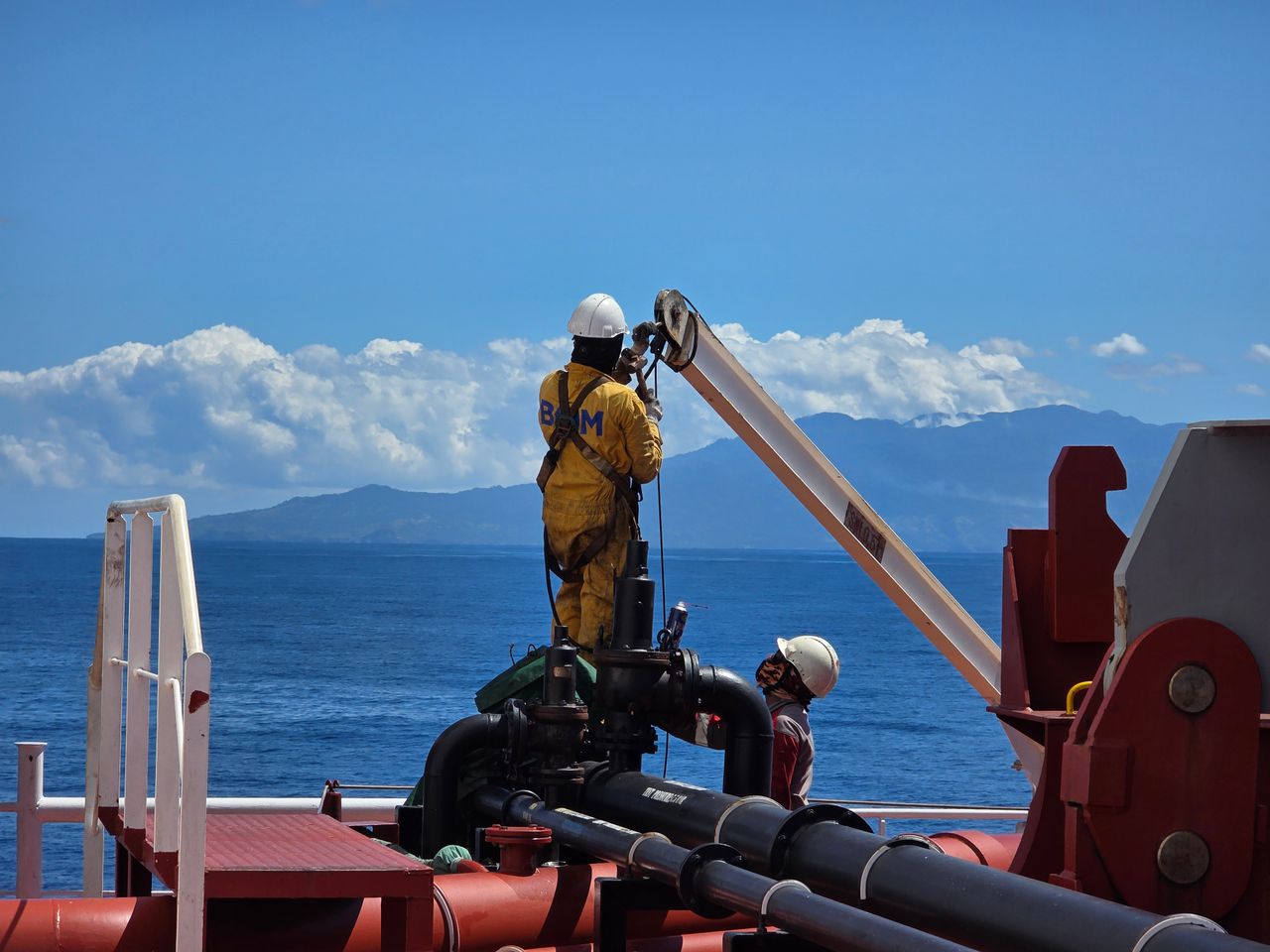
Hydrocarbons remain the backbone of African energy systems and government revenue. Established producers including Nigeria, Angola, Algeria, and Libya continue to anchor regional supply, though many rely heavily on fresh capital injections and infrastructure upgrades to offset natural output decline in mature fields. Upstream oil and gas investment in Sub-Saharan Africa is projected to rebound by roughly 12 percent in 2026, reaching close to $24 billion, with Nigeria’s deepwater and LNG pipeline projects acting as a key anchor for that recovery.
Frontier basins are drawing increasing attention as well. Capital is flowing steadily toward Mozambique, Namibia, Senegal, and Uganda as international investors search for new hydrocarbon reserves outside Africa’s mature producing fields. Uganda in particular is set to join the continent’s oil-producing nations as fields operated by international energy majors move toward first production, according to reporting from African Business.
The Electricity Access Gap Is the Real Story
Behind the investment figures sits a more urgent human reality. Roughly 590 million people across Africa still lack access to electricity, concentrated overwhelmingly in Sub-Saharan Africa. Capital, however, is not distributed evenly across the continent. South Africa and North Africa together account for less than 20 percent of Africa’s population but capture more than 45 percent of energy investment and over 65 percent of installed electrical capacity, leaving Sub-Saharan Africa, home to most of the region’s people, chronically underfunded relative to its needs.
Closing that gap requires a scale of investment well beyond current levels. Reaching universal electricity access globally by 2030 would require roughly $8 billion a year, with about half of that figure needed specifically for Sub-Saharan Africa, according to the joint Tracking SDG 7 Energy Progress Report compiled by the IEA, IRENA, the UN Statistics Division, the World Bank, and the WHO.
Why Renewables Are Becoming Africa’s Best Risk-Adjusted Energy Bet
The economics of clean power in Africa have shifted decisively. Solar and wind are now cheaper than coal and gas in several of the continent’s largest markets, including Nigeria, Egypt, and South Africa, a cost advantage that did not exist even a few years ago. Africa holds an estimated 60 percent of the world’s best solar resources, yet its share of global renewable energy investment has historically remained below its share of global electricity generation, a mismatch that signals significant room for capital to close the gap.
Financing Architecture Is Finally Catching Up
New mechanisms are emerging specifically to de-risk private capital entering African power markets. The African Development Bank, working alongside the UK-backed London Communiqué, has helped mobilize private investment into African clean energy, critical minerals, and infrastructure, anchored by an $11 billion capital replenishment for the African Development Fund. Separately, the World Bank’s Multilateral Investment Guarantee Agency has approved a $1.65 billion guarantee framework designed specifically to reduce the risk perception that has historically kept institutional capital away from African renewable energy projects.
Gas-to-Power Is Bridging the Transition
Natural gas is increasingly viewed across the industry as the practical bridge fuel for African industrialization. Discoveries in Mozambique, Tanzania, Senegal, and Mauritania are positioned to reshape the continent’s power mix, and gas-to-power demand across Africa is projected to rise roughly 4.5 times as countries look to fire industrial growth with domestically produced fuel rather than costly imports. Analysts at S&P Global project Africa’s share of the global LNG market will grow from around 7 percent today to 13 percent by 2050.
Where Investors Should Be Looking
For investors evaluating entry points into Africa’s energy and oil sector, four categories currently offer the strongest combination of scale, policy support, and commercial return.
- Upstream oil and gas in frontier basins. Mozambique, Namibia, Senegal, and Uganda are attracting rising international capital as new hydrocarbon reserves come online.
- Utility-scale solar and wind. Markets with stable procurement policy and predictable tariffs, including South Africa, Morocco, and Egypt, are proving that renewables can be built and financed at scale.
- Gas-to-power infrastructure. LNG import terminals and domestic gas monetization projects are turning stranded gas resources into reliable industrial power.
- Distributed generation and microgrids. Off-grid and mini-grid solutions remain one of the fastest, most capital-efficient ways to extend electricity access to underserved rural populations.
Yes! Invest Africa connects institutional investors, sovereign wealth funds, and private capital to commercially verified opportunities across this full spectrum through its Energy & Oil investment vertical, spanning independent power production, upstream hydrocarbons, and renewable infrastructure across all five African regions.
A Track Record of Delivering Returns
Structured energy investment in Africa is already producing measurable results. An Asian energy firm that invested in solar and wind projects in East Africa now powers more than 500,000 households while reducing regional reliance on fossil fuels, delivering consistent financial returns alongside strong ESG performance. This is the model the sector rewards: patient capital deployed into commercially sound projects with credible offtake structures and government support.
Frequently Asked Questions
1. Why does Africa attract so little global energy investment despite its needs?
Africa accounts for roughly 20 percent of the world’s population but only about 3 percent of global energy investment, largely due to perceived risk, limited grid infrastructure, and a decline in public development finance over the past decade.
2. Is oil and gas still a good investment in Africa?
Yes. Established producers such as Nigeria and Angola continue to generate strong returns, and frontier markets including Mozambique, Namibia, and Uganda are attracting rising international capital as new reserves come online.
3. Are renewables more attractive than oil and gas for new investors?
Both offer strong opportunities. Solar and wind are now cost-competitive with fossil fuels in several major markets, while oil and gas continue to anchor government revenue and export earnings, making a diversified energy portfolio the most resilient strategy.
4. Which African countries offer the best energy investment climate?
South Africa, Morocco, Egypt, and Nigeria currently offer the most established investment frameworks, while Mozambique, Namibia, Senegal, and Uganda are emerging as high-growth frontier markets.
5. How can foreign investors enter Africa’s energy and oil sector?
Most investors enter through direct project equity, joint ventures with local operators, or by partnering with an investment facilitation firm that provides regulatory guidance, due diligence, and introductions to vetted developers and government stakeholders.
Power Africa’s Future, and Your Portfolio
Africa’s energy sector offers a rare combination: proven hydrocarbon assets generating steady returns today, and a renewable power market positioned for exponential growth over the next decade. Investors who move now, across oil, gas, and renewables, are positioned to capture returns while helping close one of the world’s most consequential infrastructure gaps.
Yes! Invest Africa connects institutional investors, private equity firms, and high-net-worth individuals with commercially verified energy and oil opportunities across all five African regions. Request your free consultation today and let our team guide you from sector selection to market entry.