 Developer Developer
No European country is better positioned to invest in Africa’s renewable energy boom than Spain. Separated from Morocco by just 14 kilometers of water at the Strait of Gibraltar, Spain sits closer to African solar and wind resources than any other major European economy, and Spanish capital, engineering expertise, and development finance have already been flowing into Moroccan clean energy for well over a decade. As Morocco pushes toward 52 percent renewable electricity by 2030 and positions itself as a clean power exporter to Europe, Spanish investors are uniquely placed to benefit from proximity, established relationships, and a genuinely proven track record.
A Financial Relationship Two Decades in the Making
Spain’s involvement in African renewable energy is not a recent trend chasing headlines. It reflects sustained financial commitment stretching back to some of the continent’s earliest major clean power projects.
Early Spanish Financing Helped Build Morocco’s Solar Foundation
According to EcoMENA’s analysis of renewable energy in Morocco, the Ain Beni Mather Integrated Solar Thermal Combined Cycle Power Station, commissioned in 2011 with a production capacity of 472 megawatts, was financed with $544 million in total costs, including a $129 million loan from Spain’s Instituto de Crédito Oficial, alongside financing from the African Development Bank and the Global Environment Facility. This early Spanish public financing helped establish Morocco as one of Africa’s most promising renewable energy markets years before the country’s now-famous Noor solar program existed, giving Spanish institutions a genuine first-mover position in African clean energy finance.
Spanish Companies Continue Actively Scouting Moroccan Opportunities
That early institutional involvement has evolved into active private sector engagement. According to Atalayar, Kaylon Energías Renovables, a Spanish company specializing in solar energy, has been part of Spanish business delegations exploring investment opportunities in Morocco, with its director Mimoun Lamsayah describing Morocco as the most promising African destination for renewable energy investment. Lamsayah pointed to the maturity of solar technology and the reliability of systems now backed by 30-year operational guarantees, framing Moroccan solar not as an emerging bet but as a proven asset class ready for serious capital deployment.
Why Morocco Is the Clear Entry Point for Spanish Renewable Capital
Morocco’s renewable energy sector offers Spanish investors a rare combination: geographic proximity, policy stability, and genuinely world-class solar and wind resources.
A Renewable Energy Program Approaching Its 2030 Target
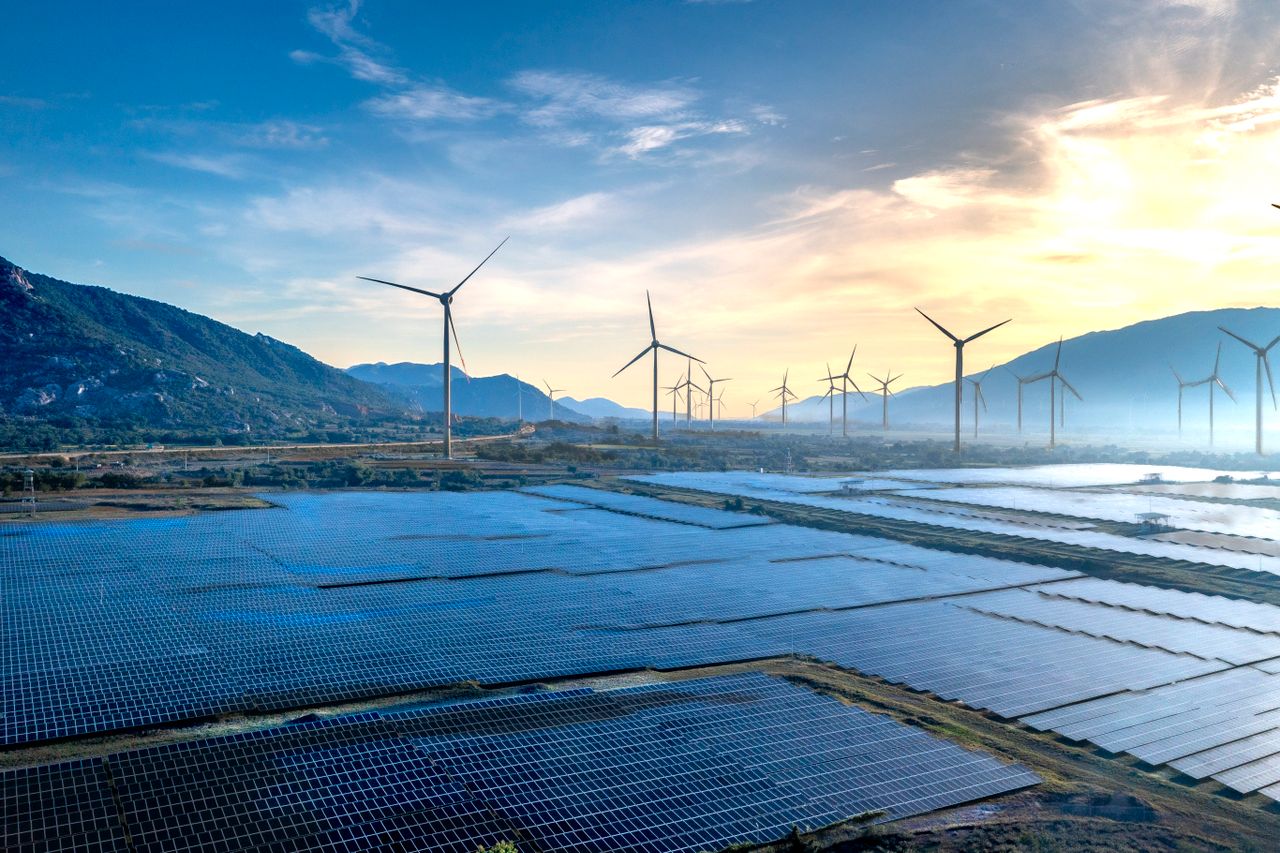
According to Atalayar’s detailed sector analysis, renewable energy contributed 44 percent of Morocco’s total energy mix by the end of 2024, just six percentage points short of the government’s 2030 target. Morocco’s wind capacity factor stands at roughly 60 percent, three times higher than comparable figures in the European Union and United Kingdom, driven by average wind speeds between 9.5 and 11 meters per second. That resource quality helped Morocco rank first in Africa, and 27th globally, on EY’s 2025 Renewable Energy Country Attractiveness Index, ahead of both Egypt and South Africa.
Major Capacity Additions Are Already Under Construction
Morocco’s build-out is not theoretical. According to TendersGo’s 2026 market analysis, the Noor Midelt hybrid solar and storage project is projected to add 800 megawatts of capacity by 2026, while the 150-megawatt Taza Wind Farm continues expanding the country’s wind footprint, with wind energy expected to account for 15 percent of the total energy mix by the same year. Morocco’s overall renewable capacity reached approximately 5.3 gigawatts in 2024, with an additional 2.6 gigawatts under development between 2023 and 2027, split across hydroelectric, wind, and solar projects, according to Atalayar’s reporting. The wind sector alone has attracted 36 billion dirhams in investment for that development period.
A Green Hydrogen Hub With Direct Spanish Participation
Spain’s involvement extends into Morocco’s greenfield hydrogen ambitions as well. According to Net Zero Circle, Morocco and the ORNX consortium, spanning the United States, Spain, and Germany, signed a $4.5 billion deal in February 2026 to build a green ammonia hub in Laayoune, using 2 gigawatts of renewable capacity and 900 megawatts of electrolysis to produce green hydrogen and ammonia for export. This positions Spanish capital directly inside one of the most ambitious green industrial projects on the African continent, alongside international partners rather than as an isolated bilateral investment.
Where the Investment Opportunities Are Concentrated
For Spanish investors evaluating Africa’s renewable energy sector, four categories currently offer the strongest combination of proximity, proven demand, and policy support.
Utility-Scale Solar and Wind Development
With Morocco’s Renewable Energy Country Attractiveness Index ranking confirming its status as Africa’s top destination, utility-scale solar and wind projects tied to MASEN, the Moroccan Agency for Sustainable Energy, remain the most established entry point. According to Energy Solutions’ 2026 tender tracker, MASEN continues to drive major tenders including Noor Midelt III and the Nassim Nord wind program, positioning Morocco as a potential green energy exporter to Europe.
Green Hydrogen and Ammonia Infrastructure
Following the ORNX consortium model, green hydrogen and ammoSpanish Investment in Africa | Yes! Invest Africania production infrastructure represents one of the fastest-growing categories in Moroccan renewable energy, combining Spain’s existing industrial expertise in ammonia and fertilizer production with Morocco’s renewable power surplus.
Cross-Border Interconnection and Grid Infrastructure
Spain’s physical proximity to Morocco creates a distinctive opportunity unavailable to most other investors: cross-border electricity interconnection infrastructure that could allow Moroccan renewable power to feed directly into European grids, turning geographic closeness into a genuine commercial advantage rather than just a logistical convenience.
Water Desalination Powered by Renewables
According to Net Zero Circle, solar- and wind-powered desalination plants are opening entirely new investment channels in Morocco, helping address water demand sustainably while creating additional revenue streams for renewable energy developers beyond electricity sales alone.
Yes! Invest Africa connects Spanish investors to this pipeline through its Energy & Oil investment vertical, providing access to commercially verified renewable energy opportunities across Morocco and the wider North Africa region.
A Corridor Built on Proximity, Proof, and Policy Alignment
Spain’s renewable energy relationship with Africa, and Morocco in particular, is unusually well established compared to most cross-continental investment corridors. It combines two decades of development finance history, active private sector engagement from Spanish solar specialists, and direct participation in landmark green hydrogen projects, all anchored by nothing more than 14 kilometers of open water separating the two markets.
Frequently Asked Questions
1. Why is Spain particularly well positioned to invest in African renewable energy?
Spain is geographically closer to Morocco’s world-class solar and wind resources than any other major European economy, separated by just 14 kilometers at the Strait of Gibraltar, and has a financing relationship with Moroccan renewable energy projects dating back to at least 2011.
2. Which African country attracts the most Spanish renewable energy interest?
Morocco is by far the leading destination, ranking first in Africa on EY’s 2025 Renewable Energy Country Attractiveness Index and hosting a long history of Spanish public and private investment in solar, wind, and green hydrogen projects.
3. What is the ORNX consortium’s green ammonia project in Morocco?
It is a $4.5 billion green ammonia hub planned for Laayoune, developed by a consortium spanning the United States, Spain, and Germany, using 2 gigawatts of renewable capacity and 900 megawatts of electrolysis to produce green hydrogen and ammonia for export.
4. Is Morocco’s renewable energy sector still growing in 2026?
Yes. Morocco added significant new capacity in 2026, including the 800-megawatt Noor Midelt hybrid solar and storage project and continued expansion of the Taza Wind Farm, as the country pushes toward its 2030 target of 52 percent renewable electricity.
5. How can Spanish investors enter Africa’s renewable energy market?
Most investors enter through direct project equity in solar or wind developments, joint ventures with Moroccan agencies such as MASEN, participation in green hydrogen consortiums, or by working with an investment facilitation partner that provides due diligence and introductions to vetted local operators.
Capture Africa’s Closest Renewable Energy Opportunity
Spain’s proximity to Morocco, combined with a proven multi-decade investment history and active participation in landmark green hydrogen projects, makes it one of the best-positioned nations in the world to capture Africa’s renewable energy growth. Investors who build on this established corridor are entering a market with proven demand, strong policy support, and some of the best solar and wind resources on the planet.
Yes! Invest Africa connects institutional investors, private equity firms, and high-net-worth individuals with commercially verified renewable energy opportunities across Morocco and all five African regions. Request your free consultation today and let our team guide you from sector selection to market entry.