 Article Writer
West Africa’s Agriculture Surge in 2026
The global food system is at a crossroads in 2026, and West Africa has emerged as the most critical solution to global supply chain resilience. No longer just a region of untapped potential, West Africa is currently undergoing a “Green Industrial Revolution.” For investors tracking the region, 2026 marks the year where digital transformation, favorable trade policies, and large-scale mechanization have converged to create a high-growth asset class.
At Yes! Invest Africa, we have observed a fundamental shift in how capital is deployed across the ECOWAS region. The focus has moved from traditional, labor-intensive farming to “Agribusiness 4.0” a model that integrates artificial intelligence, climate-smart infrastructure, and local processing. This surge is not just about food security; it is about capturing the massive value-added margins that were previously exported to overseas refineries.
The 2026 Landscape: Why West Africa is Non-Negotiable
According to the Africa Finance Corporation’s 2026 Compendium, the agribusiness sector is now the fastest-growing contributor to West African GDP. Several factors are driving this unprecedented momentum.
The AfCFTA Catalyst
The full implementation of the African Continental Free Trade Area (AfCFTA) in 2026 has effectively removed the “border friction” that once hindered agricultural trade. Today, a rice miller in Nigeria can source paddy from Mali or Senegal with zero tariffs, creating a unified market of over 400 million people. This regional integration has de-risked West Africa agriculture investment by providing a guaranteed domestic market that is less sensitive to global price shocks.
Digital Leapfrogging and Agritech
By 2026, more than 60% of commercial farms in West Africa are utilizing some form of digital optimization. From satellite-based crop monitoring to blockchain-enabled traceability, technology has solved the “trust gap” for international investors. According to the MEST Africa 2026 AgriTech Report, investment in West African agritech startups has surpassed $1.2 billion this year, focused primarily on supply chain transparency and fintech for smallholder farmers.
Sector Spotlights: High-Yield Opportunities in 2026
The 2026 surge is most visible in three specific value chains where West Africa holds a global competitive advantage.
1. The Cocoa and Cashew Processing Boom
Côte d’Ivoire and Ghana remain the world’s leading producers, but the strategy has changed. In 2026, the “Made in West Africa” brand for finished chocolate and roasted cashews is gaining significant shelf space in Europe and Asia.
- The Opportunity: Investing in local “Primary Processing Hubs” that convert raw beans into butter, liquor, and kernels.
- The Highlight: Côte d’Ivoire’s co-inauguration of the Paris International Agricultural Show (SIA 2026) has put a global spotlight on its “Agricultural Heritage meets Technology” strategy.
2. The Rice Self-Sufficiency Race
Rice is the most consumed staple in West Africa. In 2026, countries like Senegal and Nigeria have achieved near-total self-sufficiency through massive investments in irrigated river basins.
- Investment Peak: Large-scale commercial milling facilities and automated irrigation systems are currently yielding internal rates of return (IRR) exceeding 25% for early-stage institutional investors.
3. Sustainable Oil Palm and Rubber
With Southeast Asian production facing land constraints, West Africa has regained its status as the world’s most viable expansion frontier for sustainable oil palm. The 2026 focus is on RSPO-certified plantations that prioritize biodiversity, making them highly attractive to ESG-focused funds.
Infrastructure: Mechanization and Power
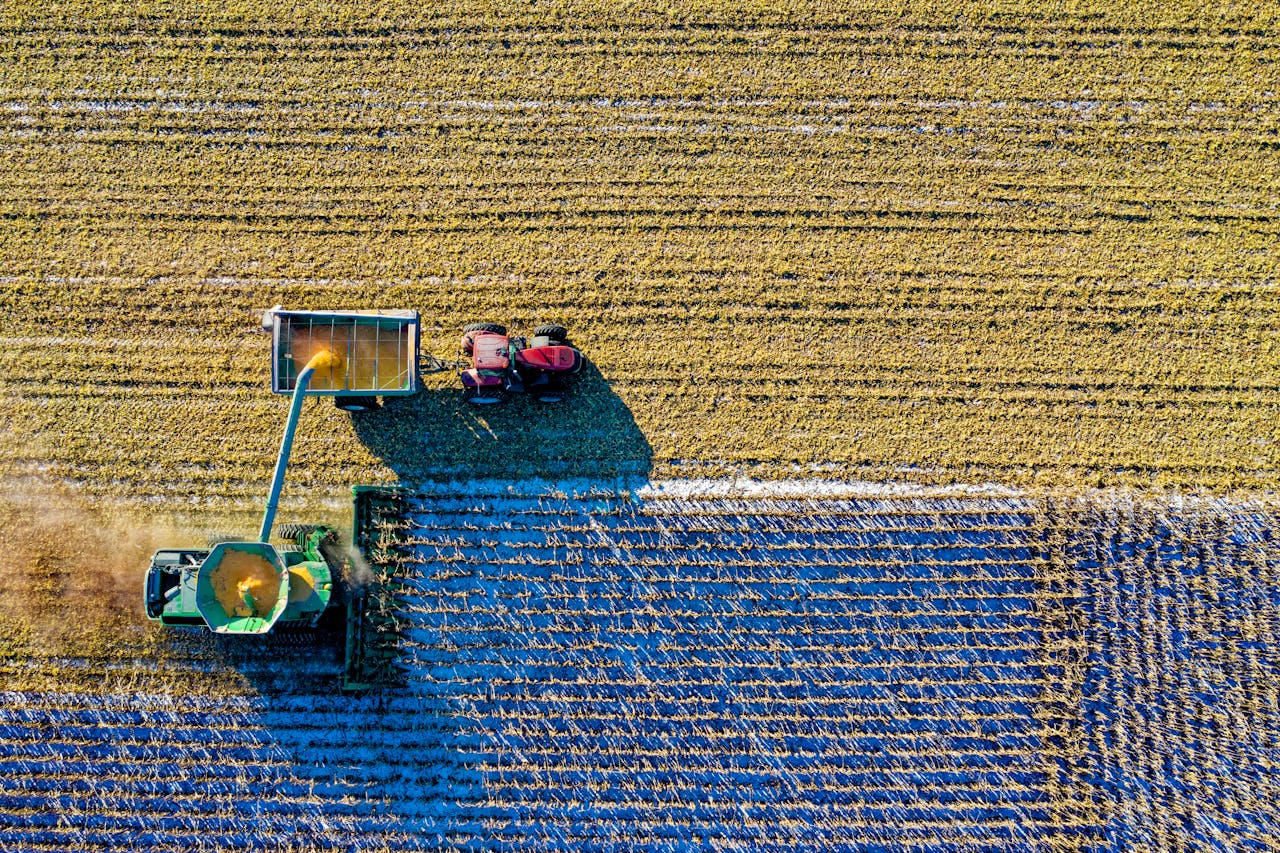
A major bottleneck was removed in late 2025 when Ghana announced a plan to deploy over 4,000 farm machines across 50 districts by 2026. This “Mechanization as a Service” model allows smallholder clusters to access tractors, harvesters, and precision seeders, drastically increasing yields per hectare.
Furthermore, the rise of solar-powered cold storage in rural hubs has reduced post-harvest losses historically as high as 40% to less than 15% in 2026. This infrastructure backbone is the “invisible engine” driving the profitability of West Africa agriculture investment.
ESG and Social Impact: The Heart of the Growth
In 2026, social impact is a performance metric. Investors are prioritizing projects that empower youth and women, who represent the majority of the agricultural workforce. By providing micro-insurance and mobile-based credit, agribusinesses are building a resilient middle class that serves as both the producer and the consumer of the region’s agricultural output.
FAQ: West Africa Agriculture Surge
- Which country offers the best ROI for West Africa agriculture investment in 2026?
Côte d’Ivoire and Ghana remain leaders for export crops (cocoa/cashew), while Nigeria and Senegal offer the highest returns for domestic staples like rice and poultry due to their massive urban populations.
- How has climate change affected the 2026 outlook?
While risks exist, the 2026 surge is driven by “Climate-Smart” techniques, including drought-resistant seed varieties and solar-powered irrigation, which have stabilized yields despite weather variability.
- Is it possible to export processed goods from West Africa to the EU?
Yes. In 2026, many West African processors have achieved full EU-certified organic and fair-trade status, allowing them to bypass traditional raw commodity tariffs and access premium consumer markets.
- What role does the government play in securing land for investors?
Many West African nations have established “Agro-Industrial Zones” (Special Economic Zones) where the government provides pre-cleared land with secured titles and dedicated utility connections for long-term lease.
- How does Yes! Invest Africa assist with agricultural entry?
We provide the “ground-truth” intelligence, navigate local land tenure systems, and facilitate partnerships with vetted local cooperatives to ensure your investment is both secure and impactful.
Your Strategic Partner in the Green Revolution
Navigating the scale and complexity of the West African agricultural surge requires local intelligence and high-level institutional liaison. At Yes! Invest Africa, we specialize in connecting international capital with the most lucrative segments of the food and fiber supply chain. From digital farm management to industrial-scale processing, we ensure your investment is positioned for long-term growth in the world’s most vibrant agricultural market.
Contact Yes! Invest Africa today for a bespoke briefing on West Africa agricultural and AgTech opportunities.