 Article Writer
Angola has quietly become Africa’s most important diamond growth story. In the third quarter of 2025, Angola overtook Botswana as the continent’s largest diamond exporter by value, a shift driven by a string of extraordinary large-stone recoveries that pushed the country’s average value per carat well above its long-standing regional rival. For investors evaluating exposure to Africa’s diamond sector, Angola now represents something rarer than a stable incumbent. It represents a market still building out its value chain, with the mine-to-market margin still largely up for grabs.
Angola’s Diamond Sector at a Glance
Angola produced approximately 10 million carats in 2025, generating export revenue of roughly $1.6 billion. While that volume trails Botswana’s output, Angola’s rise to the top of the continent’s value rankings signals something more important than scale: a shift toward higher-quality, higher-value stone recovery that is reshaping how investors should think about the country’s mining sector.
That shift is a direct outcome of policy. Angola ended its civil war in 2002 and has since pursued a sustained transparency and anti-corruption reform program aimed at rebuilding investor confidence in the sector. Diamond development has become a stated national priority under President João Lourenço’s administration, explicitly framed as a way to reduce the country’s historical overdependence on oil revenue, according to reporting from Invest-Time.
The Luele Mine: Angola’s Next Major Growth Driver
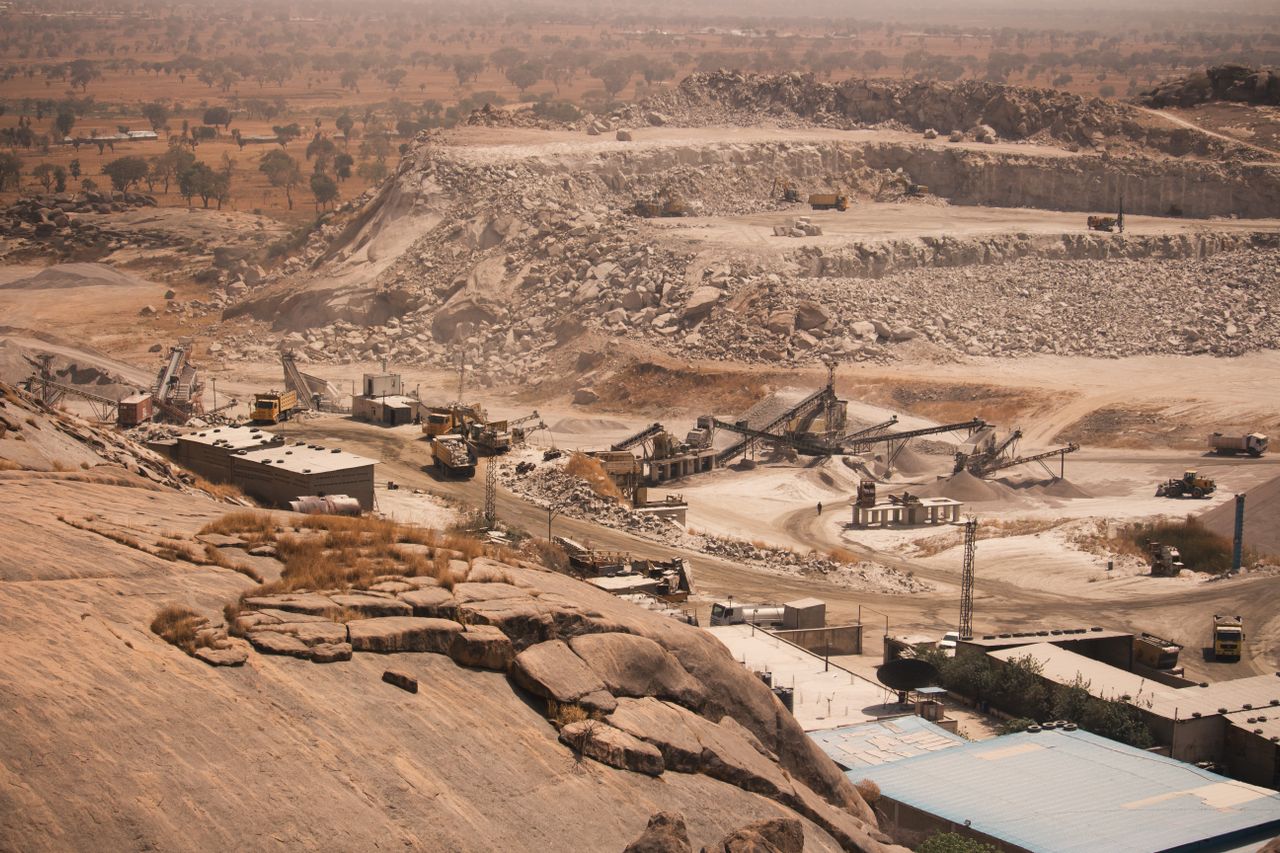
The clearest signal of Angola’s trajectory is the Luele diamond mine, operated by the state-linked mining company Catoca. Luele is projected to deliver up to 1 million carats per year, more than half of Angola’s current annual national production, and is expected to create roughly 3,000 direct jobs. The project is majority owned by Catoca, in which Russia’s Alrosa holds a significant stake, alongside Angola’s state diamond company Endiama and several other shareholders. For investors, Luele illustrates how Angola’s diamond sector is scaling through large, structured joint ventures rather than fragmented artisanal operations, a model that tends to offer clearer governance and more predictable returns.
Understanding the Diamond Value Chain, and Where Angola Sits Today
Africa’s diamond industry generates value across four distinct stages, and understanding where a producer country sits within that chain is essential for evaluating investment opportunity.
Exploration, Mining, and Recovery
This is the stage where rough diamonds are extracted from kimberlite pipes or alluvial deposits. Industry estimates place the global value of this segment at roughly $14 billion. Angola is well established here, with Catoca and Luele anchoring large-scale formal production alongside a substantial base of artisanal and small-scale mining activity.
Sorting, Valuing, and Sales
Once recovered, rough diamonds must be sorted and valued before entering the market. This segment is estimated at roughly $18 billion globally. Angola has been steadily building domestic sorting and valuation capacity through Endiama and Sodiam, its state diamond marketing company, reducing its historical reliance on export of unsorted rough stone.
Cutting and Polishing: Angola’s Biggest Untapped Opportunity
Cutting and polishing represents an estimated $34 billion segment of the global diamond value chain, and it is precisely where Angola has the most room to grow. Angola has announced plans for a diamond polishing hub in Luanda, mirroring strategies already proven by neighboring Botswana, whose 30 local cutting and polishing factories have trained roughly 3,500 skilled diamond cutters. According to industry analysis published by Africa Gold Suppliers, local beneficiation, meaning the processing, cutting, and polishing of rough diamonds within African producer countries rather than shipping them to Antwerp, Tel Aviv, or Mumbai, is the single most significant structural shift underway in the sector through 2026.
Downstream Jewelry and Consumer Sales
The final and largest segment of the value chain is downstream jewelry and consumer sales, estimated at roughly $75 billion globally. This is the segment where value is multiplied most dramatically, and it remains almost entirely untapped by African producer nations, including Angola. Growing domestic jewelry manufacturing in markets such as Nigeria, Kenya, and Ghana points to a wider continental opportunity that Angola, with its rising raw production, is well positioned to capture as its middle class and regional retail markets expand.
Why Beneficiation Is the Investment Thesis for Angola’s Diamond Sector
The pattern across Africa’s leading diamond producers is unmistakable. Countries that combine mineral deposits with downstream processing ambition are able to negotiate stronger commercial terms and capture significantly more value per carat. Botswana has already renegotiated its long-standing agreement with De Beers to sell a larger share of its own diamonds independently, a model Angola is positioned to follow as its own beneficiation infrastructure matures.
According to the African Development Bank, integrated mining clusters that combine extraction, processing, and manufacturing with supporting infrastructure generate substantially more direct and indirect employment per unit of ore processed than isolated extraction projects, while also retaining significantly more value within the domestic economy. For Angola, this points toward a clear investment thesis: capital deployed into cutting, polishing, and downstream jewelry infrastructure today is positioned to capture value that Angola’s raw production growth has not yet monetized.
Where Investors Should Focus
For investors evaluating Angola’s diamond sector, three categories currently stand out as the most commercially attractive entry points.
- Cutting and polishing infrastructure. Angola’s planned Luanda polishing hub represents a first-mover opportunity in a segment worth an estimated $34 billion continent-wide, with limited existing domestic competition.
- Formal large-scale mining joint ventures. Projects structured like Luele, combining state ownership with experienced international partners, offer clearer governance and more predictable production economics than fragmented artisanal operations.
- Downstream jewelry and retail. As Angola’s middle class expands, domestic jewelry manufacturing and retail represent an underdeveloped segment with strong long-term growth potential.
Yes! Invest Africa connects investors to opportunities across this pipeline through its Mining & Natural Resources investment vertical, providing access to commercially verified projects spanning extraction, beneficiation, and downstream processing across Angola and the wider Southern Africa region.
A Sector Built for Long-Term, Structured Capital
Angola’s diamond sector rewards patient, well-structured investment. A European mining group that partnered with a Southern African diamond producer to build local cutting and polishing capacity increased its export margin by capturing value historically lost to overseas processing hubs, while simultaneously creating hundreds of skilled local jobs. That is the model Angola’s next phase of growth is built to replicate at scale.
Frequently Asked Questions
1. Why did Angola overtake Botswana as Africa’s largest diamond exporter by value?
Angola’s rise was driven primarily by a series of exceptional large-stone recoveries in 2025, which pushed its average value per carat significantly above Botswana’s, even though Botswana still produces a higher total volume of carats.
2. What is the Luele diamond mine and why does it matter for investors?
Luele is a major new mine operated by Catoca, projected to produce up to 1 million carats annually, more than half of Angola’s current national output. It represents Angola’s clearest example of large-scale, structured diamond investment.
3. What does beneficiation mean in the context of diamond mining?
Beneficiation refers to processing raw diamonds domestically, through sorting, cutting, polishing, and jewelry manufacturing, rather than exporting unprocessed rough stones. It allows producer countries to capture significantly more value from their resources.
4. Is Angola’s diamond sector safe for foreign investment?
Angola has pursued sustained governance and transparency reforms since the end of its civil war in 2002, and diamond development is treated as a national economic priority, which has steadily improved the sector’s investment climate.
5. Where is the biggest investment opportunity in Angola’s diamond value chain?
Cutting, polishing, and downstream jewelry manufacturing currently represent Angola’s most underdeveloped and highest-potential segments, offering investors a first-mover advantage as the country builds its planned Luanda polishing hub.
Invest in Angola’s Diamond Value Chain
Angola’s diamond sector has moved past its extraction-only past and is now positioning itself to capture far more value from every carat it produces. With major new mines coming online, a growing state commitment to local beneficiation, and a planned polishing hub in Luanda, the country offers investors a rare opportunity to enter a resource-rich market before its full value chain has been built out.
Yes! Invest Africa connects institutional investors, private equity firms, and high-net-worth individuals with commercially verified mining and beneficiation opportunities across Angola and all five African regions. Request your free consultation today and let our team guide you from sector selection to market entry.