 Developer Developer
This investment guide to Rwanda covers everything a foreign investor needs to know about one of Africa’s most remarkable economic success stories. Rwanda’s economy grew 9.4% in 2025. That figure exceeded official projections and reinforced the country’s position as one of the continent’s fastest-growing economies. Furthermore, Rwanda ranked first in Africa in the World Bank’s B-Ready 2025 report with an overall score of 67.94, making it the continent’s benchmark for regulatory efficiency and investor protection. For investors seeking high-growth, low-friction market entry in Sub-Saharan Africa, Rwanda is the clearest and most data-backed starting point available today.
This guide breaks down Rwanda’s macroeconomic fundamentals, the key investment sectors generating the strongest returns, the regulatory environment, the risks every investor must understand, and the practical steps required to enter the market.
Rwanda’s Economic Foundation: The Numbers Behind the Growth
Consistent High Growth Across a Decade
Rwanda’s GDP reached approximately $15 billion in 2025. Its economy has grown at an average of 7% annually over the past decade, according to the US State Department’s 2025 Rwanda Investment Climate Statement. Furthermore, growth in 2025 reached 9.4%, surpassing targets set at the start of the year. The IMF projects continued strong growth, with full-year 2025 growth confirmed at 7.8% in the first half of the year, driven by services, industry, and agriculture.
Rwanda’s services sector is the economic engine. It contributed between 46% and 50% of GDP in the first and second quarters of 2025. Industry contributed 23%, and agriculture 24%. In 2025, digital services, artificial intelligence, fintech, and space technology emerged as increasingly important growth drivers alongside the traditional sectors, according to the US International Trade Administration’s Rwanda Market Overview.
FDI Growing and Diversifying
FDI inflows to Rwanda reached $523 million in 2023, a 5.4% year-on-year increase, according to UNCTAD’s World Investment Report 2024. Total FDI stock stood at $3.69 billion, representing approximately 26.4% of GDP. The financial sector led FDI stock distribution at 26.9%, followed by ICT at 18.1%, manufacturing at 15.2%, and electricity at 8.9%. Mauritius leads as the top source country at 27.4% of stock, followed by Kenya at 9.3%, the United States at 5.3%, and South Africa at 4.1%. This geographic and sectoral diversification signals a maturing investment environment.
Why Rwanda Is Africa’s Premier Investment Destination
First in Africa for Business Regulation
Rwanda ranks first in Africa on the World Bank B-Ready 2025 Index. Company registration takes 24 to 48 hours through the Rwanda Development Board’s fully digital online portal. The RDB manages a one-stop shop that covers company registration, tax registration, work permits, and sector-specific approvals in a single workflow. In February 2023, the government moved all remaining business and investment licensing to this expanded one-stop shop. Consequently, Rwanda’s regulatory efficiency is not simply a reputation. It is an operationally documented reality.
Low Corruption and Institutional Stability
Rwanda scores 58 out of 100 on Transparency International’s Corruption Perceptions Index, making it one of the least corrupt countries in Sub-Saharan Africa. The country has signed eight international investment agreements providing legal protections for foreign investors. Political stability has remained consistent for more than two decades. These factors together create a governance environment that institutional investors consistently rate as one of Africa’s most reliable.
100% Foreign Ownership in Most Sectors
Foreign investors can own 100% of companies registered in Rwanda in most sectors. There are no minimum capital requirements for standard private limited companies. Tax incentives are available for priority sectors including ICT, tourism, manufacturing, and financial services. Rwanda has no foreign exchange controls on investment income or dividends, making capital repatriation straightforward.
Key Investment Sectors in Rwanda
Tourism and Hospitality: The Gorilla Premium
Tourism is Rwanda’s top foreign exchange earner. The country’s gorilla trekking permits, priced at $1,500 per person per day, create one of the highest revenue-per-tourist ratios in global safari tourism. Premium lodges in Volcanoes National Park, Nyungwe Forest, and Akagera Game Reserve are among Africa’s most consistently fully booked luxury hospitality assets.
Furthermore, Kigali is becoming a leading MICE (Meetings, Incentives, Conferences, and Exhibitions) destination in Africa. The Kigali Convention Centre hosts major continental events, with demand for business hotels, serviced apartments, and conference support infrastructure growing rapidly alongside Rwanda’s profile as an international business and diplomatic hub.
ICT, Fintech, and Digital Economy
Rwanda’s digital economy is one of East Africa’s fastest growing. Kigali Innovation City, a 60-hectare mixed-use tech park, is under active development as Africa’s foremost innovation hub outside Lagos and Nairobi. The government’s Vision 2050 explicitly positions Rwanda as a knowledge-based economy. In 2025, digital services, AI, and fintech are among the fastest-growing contributors to economic output.
The financial sector leads Rwanda’s FDI inflows at 26.9% of stock. Mobile money, digital insurance, and fintech infrastructure are all expanding rapidly. The RDB actively facilitates fintech investment through streamlined licensing within the one-stop shop framework.
Agriculture and Agro-Processing
Agriculture employs approximately 70% of Rwanda’s population and contributes 24% of GDP. Rwanda’s key exports include specialty coffee and premium tea, both commanding significant premiums in European and American markets. Investment opportunities in agro-processing are expanding, with government support for dairy, poultry, aquaculture, and cold chain logistics. The value addition gap is significant. Coffee and tea are currently exported largely in raw form, with the processing margin captured internationally. Investors who establish domestic processing facilities receive tax incentives and direct market access support from the government.
Real Estate and Smart City Development
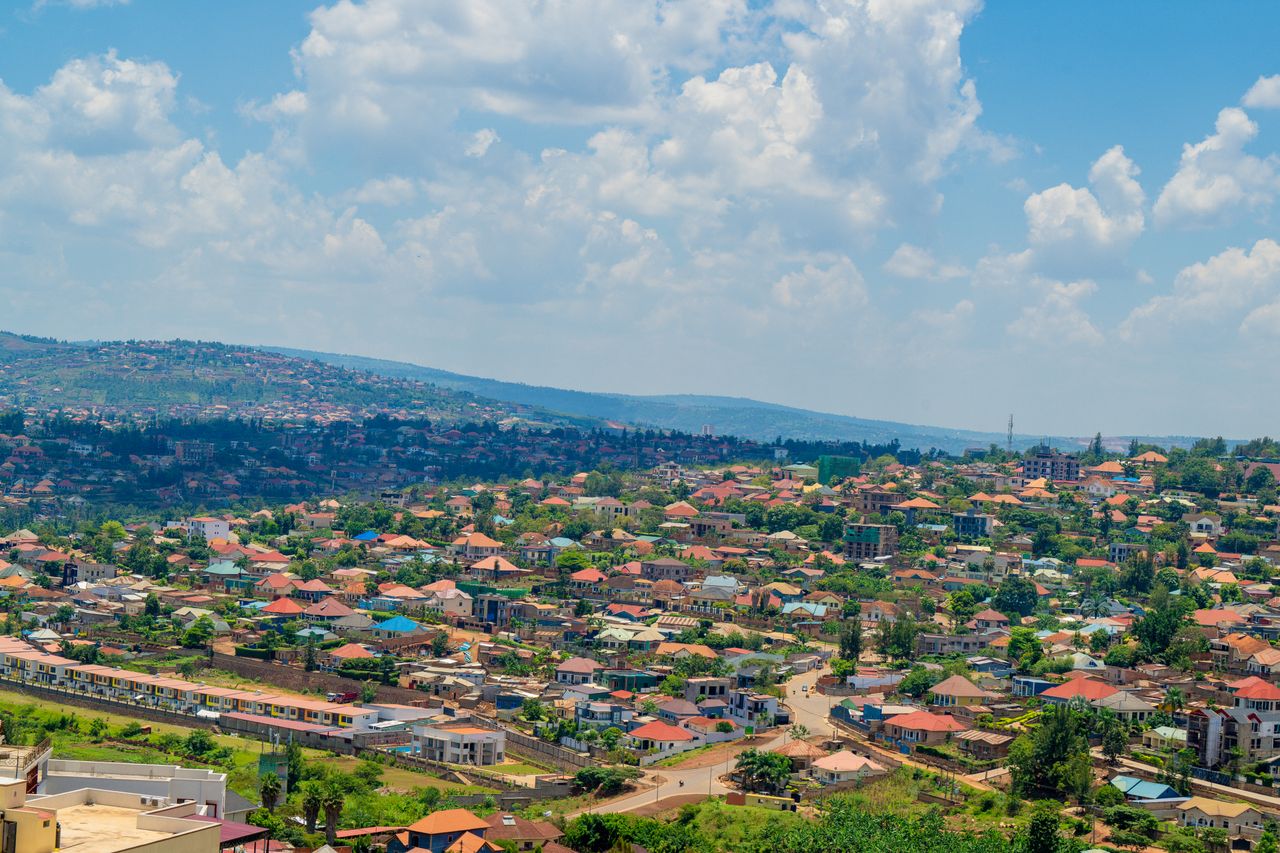
Kigali is one of Africa’s cleanest and most organized cities. Real estate investment in residential, commercial, and mixed-use projects is growing steadily as Rwanda’s urban population expands. The government is actively developing Kigali as a smart city through technology-enabled infrastructure, waste management systems, and digital utilities. Affordable housing, luxury residential developments, and grade-A commercial office space are all undersupplied relative to growing demand from Rwanda’s expanding middle class and international business community.
Mining: Tin, Tantalum, and Tungsten
Rwanda is a significant producer of the three Ts: tin, tantalum, and tungsten. These are critical minerals for global electronics and technology supply chains. The mining sector contributes meaningfully to export revenues and is increasingly formalized and transparent, with digital traceability systems tracking minerals from mine to export. Investment opportunities exist in both artisanal mining formalization and commercially scaled hard-rock mining operations.
The Regulatory Framework: What Investors Need to Know
The Rwanda Development Board
The RDB is Rwanda’s primary investment facilitation agency. It manages the one-stop shop, provides aftercare services for established investors, and coordinates government approvals for large-scale projects. The RDB’s digital systems allow investors to complete registration, tax enrollment, and license applications entirely online. Furthermore, the RDB maintains dedicated investor relations teams for priority sector investments in ICT, tourism, agriculture, manufacturing, and financial services.
Tax Incentives and Investment Protections
Rwanda offers a standard corporate income tax rate of 30%, with a reduced rate of 15% for priority sectors including ICT, tourism, and export-oriented manufacturing. Dividend withholding tax stands at 15%, reduced under double taxation agreements with Mauritius, Belgium, Morocco, and other treaty partners. Capital gains on investment exits are generally not taxed. Furthermore, Rwanda’s eight international investment agreements provide protection against expropriation, guarantee free repatriation of profits, and include investor-state dispute resolution mechanisms.
Currency Considerations
Rwanda transacts in Rwandan francs. The franc lost approximately 13.2% of its value against major currencies in 2024. Transacting in foreign currency locally is prohibited. These currency factors require investors to structure cross-border revenue flows carefully. However, Rwanda allows unrestricted repatriation of dividends and investment income in foreign currency, and dollar-denominated contracts are permitted for international trade transactions.
Risks Every Investor Should Understand
Rwanda’s market is not without risk. The domestic market, at $15 billion GDP, is relatively small. Businesses seeking scale may need to position Rwanda as a regional hub rather than a standalone market, using it as an entry point to the broader EAC bloc. Furthermore, some foreign investors report delays in government payment on public contracts. Currency depreciation is an ongoing consideration for investors whose revenues are franc-denominated.
However, Rwanda’s consistency in reform delivery, its transparent regulatory frameworks, and its proactive investment promotion make it a more manageable and predictable environment than most other Sub-Saharan African markets of comparable size.
Frequently Asked Questions
What is Rwanda’s GDP growth rate and economic outlook? Rwanda’s economy grew 9.4% in 2025, following 8.9% growth in 2024 and 8.2% in both 2023 and 2022. The IMF and World Bank project continued strong growth, supported by services, digital economy expansion, and ongoing infrastructure investment.
How easy is it for foreign investors to register a company in Rwanda? Rwanda offers one of the fastest company registration processes in Africa. Investors can complete registration through the RDB’s online one-stop shop in 24 to 48 hours. The process covers company incorporation, tax registration, and most sector licenses in a single digital workflow.
Can foreign investors own 100% of a company in Rwanda? Yes. Foreign investors can own 100% of companies in Rwanda across most sectors. There are no general minimum capital requirements for private limited companies. Tax incentives are available for priority sectors including ICT, tourism, manufacturing, and financial services.
Which sectors offer the strongest investment returns in Rwanda? Tourism and hospitality, ICT and fintech, agro-processing, real estate, and mining are currently generating the strongest returns. The financial sector leads FDI stock at 26.9%, followed by ICT at 18.1% and manufacturing at 15.2%, based on 2023 FDI data.
What are the main risks of investing in Rwanda? The primary risks include a relatively small domestic market, currency depreciation of the Rwandan franc, reported delays in government contract payments, and dependency on external financing for the national budget. Investors address these risks by positioning Rwanda as an EAC regional hub, structuring revenues in hard currency where permitted, and conducting thorough due diligence on government contract terms.
Rwanda’s combination of consistent high growth, first-ranked regulatory environment, 100% foreign ownership permissions, and a government actively competing for international investment capital makes it one of the clearest and most compelling investment destinations in Sub-Saharan Africa today. Connect with Yes! Invest Africa to explore vetted, investment-ready opportunities across Rwanda’s most commercially active sectors and receive expert guidance on market entry, company registration, and local partner introductions.