 Developer Developer
Investment opportunities in Gabon are more strategically compelling in 2026 than at any point in the country’s recent economic history. Gabon is the world’s second-largest manganese producer. It holds Africa’s most expansive intact rainforest coverage at 88% of national territory. It is one of Sub-Saharan Africa’s most politically stable countries, ranked fourth by the World Bank in that category. Furthermore, it applies the OHADA unified business law framework shared by 17 African states, giving foreign investors immediate access to a harmonized legal environment backed by standardized contract enforcement, arbitration, and corporate governance rules.
A new chapter began in May 2025, when Brice Clotaire Oligui Nguema was inaugurated as President following his election in April 2025. The new administration is accelerating the country’s economic diversification agenda, attracting interest from EU, Chinese, and Gulf Cooperation Council investors simultaneously. For investors seeking resource-rich, legally secure, and strategically positioned opportunities in Central Africa, Gabon presents a compelling and often overlooked case.
Why Gabon Stands Out as a Business Destination
A Resource Base of Exceptional Diversity
Gabon’s natural resource endowment is among the most diverse in Africa. Its mineral base includes manganese, iron ore, gold, niobium, phosphates, zinc, lead, baryte, and diamonds. Its forests contain over 60 commercially viable timber species. Its offshore waters support significant fisheries and offshore petroleum reserves. Its onshore petroleum fields have produced for over 60 years. And its intact rainforests have positioned Gabon as one of the world’s leading carbon credit markets, earning revenues from international conservation agreements that few other countries can access.
Oil currently accounts for 80% of Gabon’s exports, 45% of GDP, and 60% of fiscal revenue, according to the US International Trade Administration’s Gabon Commercial Guide. However, the government’s diversification strategy is actively opening new investment pathways across timber processing, manganese beneficiation, agribusiness, ecotourism, and digital infrastructure.
The OHADA Legal Advantage
Gabon applies the OHADA Uniform Business Law, a harmonized legal framework covering company formation, security interests, debt recovery, insolvency, and arbitration across 17 member states, according to the UGGC Africa’s 2026 Gabon investment guide. For foreign investors, OHADA dramatically reduces legal uncertainty. Standard corporate structures, enforceable contracts, and internationally recognized arbitration mechanisms are all available from day one. Furthermore, Gabon is part of the CFA franc zone, with its currency pegged to the euro, eliminating currency risk for euro-denominated investors and providing free convertibility of investment returns.
No Restrictions on Profit Repatriation
Gabon imposes no restrictions or limitations on converting, transferring, or repatriating funds associated with an investment. Foreign investors can freely move dividends, capital gains, and interest income across borders without government approval. This unrestricted capital mobility is a significant structural advantage over many other African markets where repatriation frameworks are more complex.
The Best Business Sectors to Invest in Gabon
Manganese Processing: The Most Urgent Opportunity in 2026
Gabon is the world’s second-largest manganese producer. Production is concentrated around Moanda in the Haut-Ogooué Province, where the Comilog mine operated by Eramet produces approximately 9.5 million metric tons annually. Manganese is a critical input for steel production and a growing component of battery technology for electric vehicles.
The strategic opportunity in 2026 is specific and time-bound. Gabon has announced a ban on exporting raw manganese ore by 2029. This policy, confirmed in 2026 legal and regulatory frameworks, is designed to force domestic processing of raw ore into ferromanganese, refined manganese, and battery-grade manganese products. Consequently, investors who establish local processing capacity before 2029 will be positioned to control the highest-value link in Gabon’s manganese supply chain at the exact moment that export policy forces raw material producers to find domestic processing partners. This is one of the clearest and most actionable beneficiation investment windows available in Africa right now.
Timber Processing and the Nkok Special Economic Zone
Gabon banned the export of raw logs in 2010. That single policy decision transformed the country into a domestic timber processing hub. Since the ban, sawn wood production has increased by 275%, veneer production by 199%, and plywood by 76% compared to 2010 levels, according to the US International Trade Administration. The premium African timber species Okoumé, found almost exclusively in Gabon, represents 58% of production and commands significant premiums in European and Asian markets.
The Nkok Special Economic Zone, operational since 2014, is the anchor infrastructure for Gabon’s timber processing industry. It provides investors with a preferential tax and customs regime, shared utilities, logistics infrastructure, and a streamlined regulatory environment designed specifically for industrial processing operations. Timber processing, furniture manufacturing, engineered wood products, and specialty wood exports are all active and growing investment opportunities within the Nkok framework.
Oil and Gas: Mature Fields and LNG Development
Gabon is Sub-Saharan Africa’s fifth-largest oil producer. Proven reserves exceed 2 billion barrels, with ongoing exploration activity, particularly offshore. Petroleum is the country’s historic economic pillar, though mature field output is declining and the government is actively courting investment in enhanced oil recovery, secondary production, and upstream exploration in underdeveloped acreage.
Separately, Gabon is developing its LNG sector. Natural gas that is currently flared or re-injected in oil field operations represents a feedstock opportunity for LNG liquefaction and export, aligning with growing EU and Asian demand for non-Russian gas supply. For investors with oilfield services, engineering, or upstream exploration expertise, Gabon’s mature petroleum sector provides immediate commercial access with established legal frameworks.
Ecotourism: Africa’s Most Intact Conservation Economy
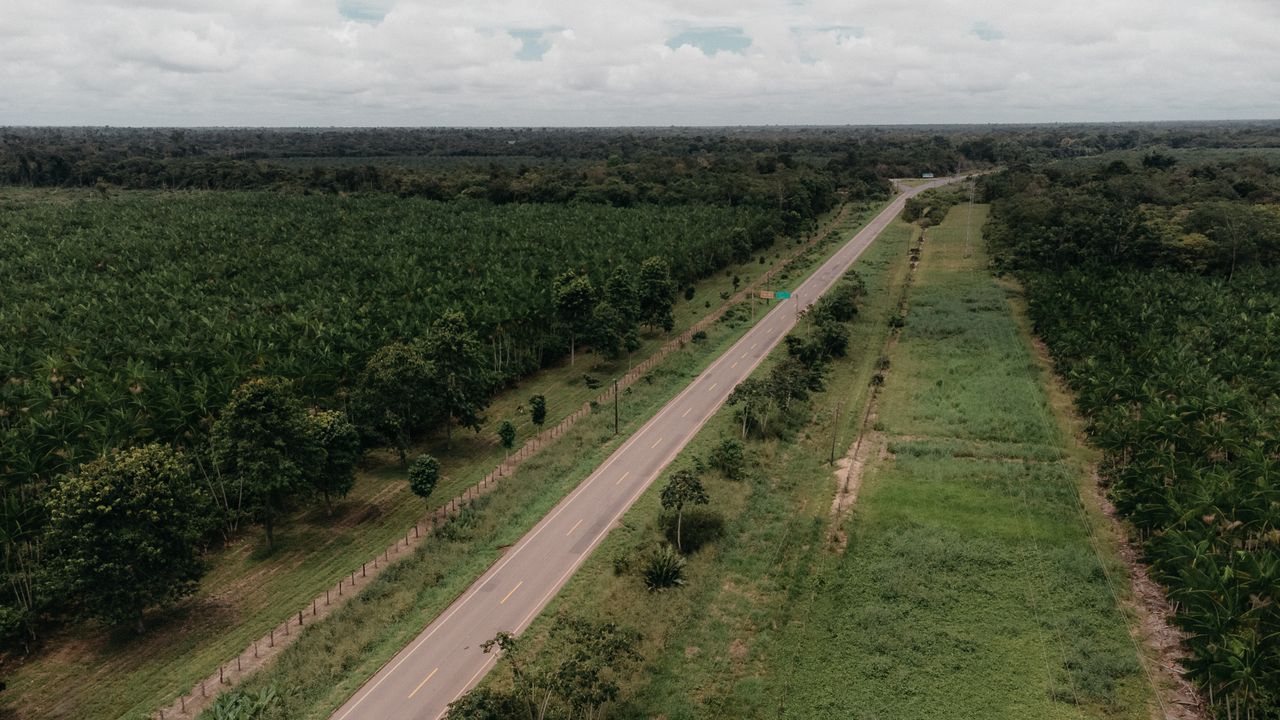
Gabon is covered in rainforest at 88% of national territory. This extraordinary conservation record gives it a unique tourism proposition. Loango National Park, where forest elephants share the beach with humpback whales and surfing hippos, is among Africa’s most dramatic and least-visited wildlife spectacles. Lopé National Park is a UNESCO World Heritage Site. The country hosts forest elephants, western lowland gorillas, mandrills, and over 650 bird species across 13 national parks covering 11% of national territory.
Private lodge investment, community-based ecotourism platforms, and specialist wildlife tourism operations are all underdeveloped relative to the country’s exceptional natural endowment. Gabon is actively investing in ecotourism infrastructure and has engaged international conservation partners to develop responsible tourism frameworks. For investors in premium conservation tourism, Gabon offers a first-mover opportunity comparable to Rwanda’s gorilla tourism sector before it became internationally recognized.
Agribusiness and Import Substitution
Gabon imports a significant share of its food requirements despite holding large areas of fertile agricultural land suitable for palm oil, rubber, cocoa, and food crops. The domestic market, while small at approximately 2.4 million people, has high per-capita income by Central African standards, with Gabon classified as an upper-middle income country. Agribusiness investment targeting import substitution, particularly in processed foods, edible oils, and packaged agricultural products, benefits from strong domestic pricing and limited local competition.
Digital Infrastructure and ICT Services
Gabon has invested heavily in its digital infrastructure since 2012. It built a high-speed national fiber optic network that reduced the cost of internet access tenfold. Subscriber numbers grew sevenfold over the same period, according to Discover Gabon’s investment portal. This digital infrastructure creates commercial opportunities in fintech, e-commerce, digital logistics, and enterprise software services serving a relatively high-income urban population concentrated in Libreville and Port-Gentil.
The Regulatory and Investment Framework
ANPI-Gabon: The Investment Gateway
ANPI-Gabon, the national investment promotion agency, serves as the primary gateway for foreign investors. It reduces administrative procedures, coordinates approvals, and provides regulatory guidance across sectors. The agency works alongside the Nkok SEZ management authority for industrial and processing investments.
Investment Code Protections
Gabon’s Investment Code provides legal guarantees against expropriation, ensures access to international arbitration for investor-state disputes, and offers tax incentives including competitive rates and customs exemptions for priority sector investments. Furthermore, the High Council for Investment, established in 2017, facilitates direct dialogue between the public and private sectors to resolve investment barriers in real time.
Infrastructure Connectivity
The Port of Owendo and the Trans-Gabon Railway connect Gabon’s interior mineral regions to the Atlantic coast for export. Ongoing infrastructure upgrades under the 2025 Development Plan, supported by the World Bank and the African Development Bank, are improving road networks and expanding port capacity.
Frequently Asked Questions
What are the most commercially viable businesses to invest in Gabon? Manganese processing, timber and wood product manufacturing, ecotourism lodges, oil and gas services, agribusiness for import substitution, and digital services are currently the strongest investment categories. The most urgent opportunity is manganese processing, given the government’s announced ban on raw manganese exports by 2029.
Is Gabon a legally secure environment for foreign investors? Yes. Gabon applies the OHADA Uniform Business Law shared by 17 African states, providing standardized corporate structures, contract enforcement, and internationally recognized arbitration. The Investment Code guarantees legal protection against expropriation, and no restrictions exist on repatriating investment returns.
Why is the Nkok Special Economic Zone important for investors? The Nkok SEZ is Africa’s most developed timber processing industrial cluster. It provides investors with a preferential tax and customs regime, shared utilities, logistics infrastructure, and a streamlined regulatory environment. It is the primary vehicle for foreign investors entering Gabon’s timber processing sector.
What is the manganese export ban and how does it create investment opportunity? Gabon has announced a ban on raw manganese ore exports by 2029. This forces domestic processing of ore into higher-value ferromanganese and refined products. Investors who establish local processing facilities before 2029 will control the most commercially valuable stage of Gabon’s manganese supply chain at exactly the moment that export policy creates mandatory demand for their services.
What are the main risks of investing in Gabon? The primary risks include Gabon’s dependence on declining oil revenues, a small domestic market of approximately 2.4 million people, administrative complexity that ranks the country 149th globally for ease of doing business, and public debt estimated at 73% of GDP in 2024. These risks are best managed by focusing on export-oriented sectors, using the Nkok SEZ framework to reduce administrative friction, and working with experienced local legal partners operating within the OHADA framework.
Gabon’s investment story in 2026 is defined by two forces operating simultaneously. First, a resource base of exceptional diversity is actively opening to more sophisticated foreign capital through beneficiation mandates, SEZ incentives, and a new administration committed to diversification. Second, the manganese processing window, the ecotourism opportunity, and the timber processing sector all represent concrete and time-sensitive opportunities that reward early movers. Connect with Yes! Invest Africa to explore vetted investment opportunities in Gabon and across the broader Central African market, with expert regulatory guidance and trusted local partner introductions.