 Article Writer
Food security is one of the defining challenges of the 21st century and Africa sits at the center of both the problem and the solution. The continent holds the world’s greatest concentration of untapped agricultural potential: over 60% of uncultivated arable land, abundant freshwater resources, diverse climate zones suitable for a vast range of food crops, and a population projected to reach 2.5 billion by 2050. Yet today, Africa spends over $35 billion annually importing food it has the capacity to produce domestically.
That gap between what Africa grows and what it needs is not a crisis for investors. It is a structural, long-duration investment opportunity of the highest order.
At YES! Invest Africa, we connect global investors with verified food security investment opportunities across Africa’s most productive agricultural regions from staple food production and irrigation infrastructure to cold chain logistics and agro-processing facilities. This is the sector where financial returns and transformative impact converge most powerfully.
Why Food Security Is Africa’s Most Urgent Investment Theme
A Growing Population Driving Structural Demand
Africa’s population is the fastest-growing on Earth. According to the United Nations, the continent’s population will double by 2050, reaching approximately 2.5 billion people. This demographic trajectory creates one of the most structurally secure demand curves in any investment sector globally: food consumption that grows by tens of millions of additional consumers every single year, with no foreseeable reversal.
The Food and Agriculture Organization (FAO) estimates that feeding Africa’s 2050 population will require a doubling of current food production volumes. Achieving that requires not incremental improvement but transformational investment in production capacity, irrigation systems, post-harvest infrastructure, processing facilities, and distribution networks. Every element of that transformation represents a bankable investment opportunity.
The $35 Billion Import Problem — And the Investment Solution
Africa currently imports over $35 billion worth of food annually, according to the African Development Bank (AfDB). Wheat from Europe, rice from Asia, poultry from South America commodities that African soil, climate, and labor can produce competitively, but that the continent has not yet built sufficient processing, storage, and logistics infrastructure to supply at scale.
The AfDB’s Feed Africa Strategy targets reducing this import dependency by mobilizing $24 billion in agricultural investment across the continent by 2025. This public capital commitment creates a powerful co-investment environment for private investors: government-backed infrastructure reducing private sector risk, development finance institution financing de-risking project structures, and policy frameworks designed to reward domestic food production investment.
For investors, this is the ideal entry scenario: entering a sector where structural demand is guaranteed, public capital is already flowing, and the competitive landscape is still uncrowded relative to the scale of the opportunity.
Key Food Security Investment Opportunities Across Africa
Staple Food Production and Irrigation Infrastructure
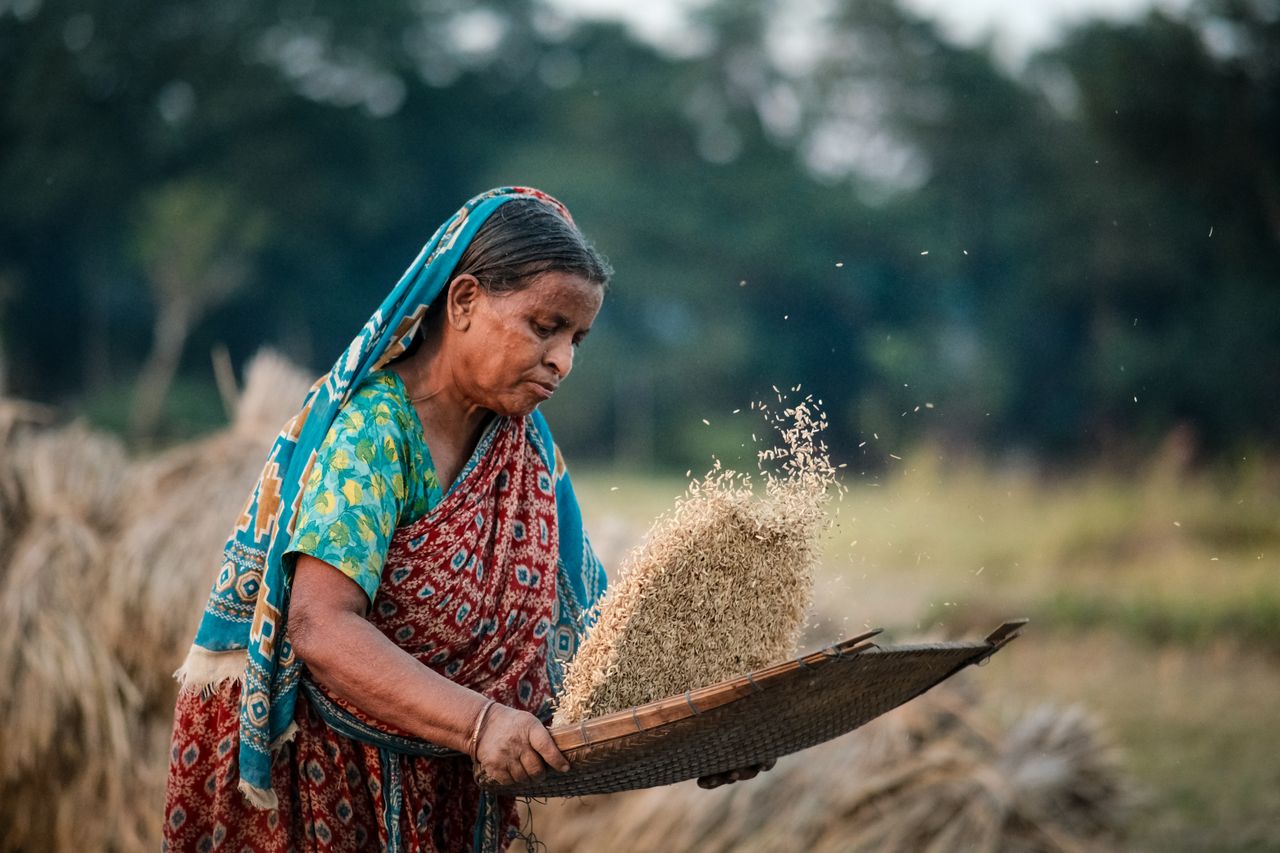
Maize, rice, wheat, cassava, sorghum, and millet are the staple foods feeding Africa’s population. Production gaps in these crops are the primary driver of import dependency and food price volatility across the continent. Investment in mechanized staple food production combined with modern irrigation systems that reduce dependence on rainfall represents one of the most direct ways to address food security while generating agricultural commodity returns.
The International Fund for Agricultural Development (IFAD) identifies smallholder farmer productivity enhancement and irrigation expansion as the two highest-return agricultural interventions available across Sub-Saharan Africa. For institutional and private investors, partnership models that combine commercial farm operations with smallholder outgrower schemes generate both scale efficiency and community benefit at a level that development finance institutions actively co-finance.
Priority geographies for staple food investment include Ethiopia’s Rift Valley, Nigeria’s Middle Belt, Tanzania’s fertile highlands, Zambia’s Southern Province, and Egypt’s Nile Delta all regions where water access, land availability, and government agricultural support programs align to create investable platforms.
Post-Harvest Infrastructure: Cold Chain, Storage, and Logistics
One of Africa’s most acute food security challenges is not insufficient production it is post-harvest loss. The FAO estimates that Sub-Saharan Africa loses between 30% and 40% of food production after harvest due to inadequate storage, poor transport infrastructure, and the near-total absence of cold chain logistics outside major urban centers. For a continent growing enough food to approach self-sufficiency, this loss rate represents a catastrophic waste of agricultural potential.
For investors, post-harvest infrastructure is a pure efficiency play. Every cold storage facility built, every grain silo erected, every refrigerated transport route established reduces food loss and captures the economic value of production that currently rots before reaching a market. These assets generate returns through storage fees, logistics contracts, and the premium pricing that quality-preserved produce commands over field-gate commodity prices.
The business case is reinforced by the AfDB’s strong financing appetite for post-harvest infrastructure, which is consistently identified as a top-priority investment gap across the continent’s agricultural systems.
Food Processing and Value-Added Manufacturing
The most powerful food security investment is one that simultaneously reduces import dependency and builds domestic industrial capacity: food processing. Flour milling, rice processing, vegetable oil refining, dairy processing, packaged food manufacturing, and fortified food production all address food security by turning raw African agricultural output into the finished food products that urban consumers demand.
The World Bank consistently identifies food processing as the highest-value agricultural investment category for developing economies generating multiplier effects through backward linkages to farmers, forward linkages to retail markets, and direct employment in manufacturing operations. For investors, food processing combines commodity exposure with manufacturing margin, creating a return profile that outperforms primary production significantly over a full investment cycle.
YES! Invest Africa structures food processing investment opportunities across West, East, and Central Africa, connecting investors with projects that have verified supply chain linkages, off-take agreements with domestic retailers and regional export buyers, and government incentives that include tax holidays, import duty exemptions on capital equipment, and access to strategic industrial zones.
Agritech and Precision Agriculture
Technology is transforming African food systems faster than many global investors realize. Mobile-based agricultural advisory platforms, drone-assisted crop monitoring, satellite soil mapping, precision irrigation management, and digital market linkages are all being deployed at scale across African agricultural landscapes. The FAO identifies digital agriculture as a priority enabler of food security across developing economies, with African agritech startups attracting growing venture capital flows from global technology investors.
For investors with a technology orientation, African agritech offers food security impact at remarkable scale, low capital intensity relative to physical infrastructure, and exposure to Africa’s fastest-growing digital economy. From seed-to-sale traceability platforms for export supply chains to AI-driven pest management systems for smallholder farmers, the agritech investment landscape in Africa is expanding rapidly and remains significantly underfunded relative to its potential.
The YES! Invest Africa Approach to Food Security Investment
Impact and Returns — Not a Tradeoff
At YES! Invest Africa, we reject the false choice between financial return and development impact. In the food security sector specifically, the two are inseparable. Every processing facility built reduces import dependency. Every cold storage unit commissioned reduces food waste. Every irrigation scheme developed reduces hunger risk for surrounding communities. And every one of these outcomes generates measurable financial returns for the investors who fund them.
Our approach to food security investment is built on four principles:
- Verified opportunities only. Every project in our pipeline has undergone rigorous due diligence covering land tenure, regulatory compliance, market access, and financial viability before being presented to investors.
- Full value chain focus. We prioritize investments that span production, processing, and distribution rather than single-point commodity exposure, maximizing both return and food system impact.
- Legal security. All investments are structured under enforceable contracts, compliant with host-country agricultural investment law and OECD Guidelines for Multinational Enterprises, with international arbitration provisions protecting investor interests.
- Community integration. Outgrower schemes, local employment frameworks, and community benefit-sharing models are built into every project structure, ensuring investments earn and maintain their social license to operate.
Frequently Asked Questions (FAQ)
- Why is food security investment in Africa considered a long-term structural opportunity rather than a short-term trade?
Africa’s food security investment case is driven by demographics rather than market cycles. A population growing by 30 million people per year, combined with rising urbanization and a rapidly expanding middle class demanding higher-value food products, creates a demand curve that compounds over decades. Unlike commodity price cycles, the underlying driver of African food demand is population growth, which is highly predictable and essentially irreversible. Investors who establish food production, processing, and logistics assets now are building positions in a market that will grow consistently for at least the next 30 years.
- What types of food security investments does YES! Invest Africa facilitate?
We facilitate investment across the full food security value chain: staple food production through commercial farming and outgrower schemes, irrigation and water management infrastructure, post-harvest cold storage and grain silo facilities, food processing and packaged food manufacturing plants, agritech platforms and precision agriculture solutions, and export-oriented horticultural supply chains. Investment structures include direct equity, project finance, joint ventures, and co-investment alongside development finance institutions.
- How do development finance institutions like the AfDB reduce risk for private investors in African food security projects?
Development finance institutions provide multiple risk-reduction mechanisms: co-financing that reduces individual investor exposure, political risk guarantees that protect against government interference or expropriation, technical assistance that improves project design and operational efficiency, and institutional credibility that strengthens projects’ relationships with host governments and local communities. YES! Invest Africa actively structures projects to qualify for development finance institution co-financing, significantly improving the risk-return profile for private investors.
- Which African regions offer the strongest food security investment opportunities right now?
The highest-priority food security investment regions in 2025–2026 are Ethiopia and Kenya in East Africa (staple food production, dairy, and agritech), Nigeria and Ghana in West Africa (food processing and cold chain logistics), Zambia and Tanzania in Southern-East Africa (commercial farming and grain storage), and Morocco and Egypt in North Africa (export-oriented horticulture and food manufacturing). Country selection depends on your sector focus and risk parameters, and our advisory team provides customized matching.
- How does YES! Invest Africa ensure food security investments meet international ESG standards?
Food security investments facilitated through YES! Invest Africa are structured to align with the UN Sustainable Development Goal 2 (Zero Hunger), OECD responsible business guidelines, and applicable international environmental and social safeguard frameworks. Where relevant, we support investors in obtaining sustainability certifications that enable access to premium-priced, ESG-committed buyer markets and satisfy the impact reporting requirements of institutional investors, endowments, and development-focused capital allocators.
Invest in Africa’s Food Security Revolution
Africa’s food systems are being transformed and the investors building the processing plants, cold storage networks, irrigation schemes, and agritech platforms driving that transformation are positioning themselves in one of the most durable long-term investment themes available anywhere in the world today.
Connect with YES! Invest Africa for a free, confidential consultation. Share your investment objectives, capital parameters, and sector interests, and our team will match you with the right food security investment opportunity across Africa’s most productive agricultural markets.
Book Your Free Consultation — Invest in Africa’s Food Systems