 Developer Developer
Diamond Mining Value Chain: Africa Investment Insights – Africa’s diamond industry extends far beyond the extraction of rough stones. From geological exploration and mine development to sorting, cutting, polishing, certification, trading, and logistics, the diamond value chain includes multiple stages where investment can create economic value.
For investors, understanding the diamond mining value chain in Africa is essential for identifying opportunities beyond traditional mining operations. Countries such as Botswana, Angola, Namibia, South Africa, Sierra Leone, and the Democratic Republic of Congo have established or developing diamond industries, while other African markets continue to explore their geological potential.
The opportunity is increasingly connected to value addition. Instead of exporting rough diamonds with limited processing, African markets can capture more economic activity through beneficiation, local processing, technology, services, and specialized infrastructure.
Understanding the Diamond Mining Value Chain
The diamond value chain begins long before a rough diamond reaches the international market. It typically includes exploration, mine development, extraction, recovery, sorting, valuation, cutting and polishing, certification, trading, transportation, and retail.
Each stage requires different technical capabilities, infrastructure, financing, and regulatory compliance.
For investors, this means diamond mining does not have to be viewed as a single business model. Opportunities can exist across the wider ecosystem supporting diamond production and commercialization.
The Kimberley Process provides official statistical data on rough diamond production and trade by participating countries, making it an important reference for understanding international diamond flows.
1. Diamond Exploration and Geological Services
Exploration represents the upstream stage of the diamond value chain.
Investors can participate through geological surveys, geophysical studies, exploration technology, drilling services, laboratory analysis, and geological data management. Modern exploration increasingly relies on advanced mapping, remote sensing, geophysical equipment, and digital geological models to identify potential deposits.
Exploration companies can also provide specialized services to mining operators that do not maintain all technical capabilities internally.
The investment case is therefore not limited to owning a diamond concession. Companies providing exploration equipment, geological consulting, laboratory services, and technical data solutions can become part of the wider mining ecosystem.
2. Mine Development and Diamond Extraction
Once a commercially viable deposit has been identified, the next stage involves mine development.
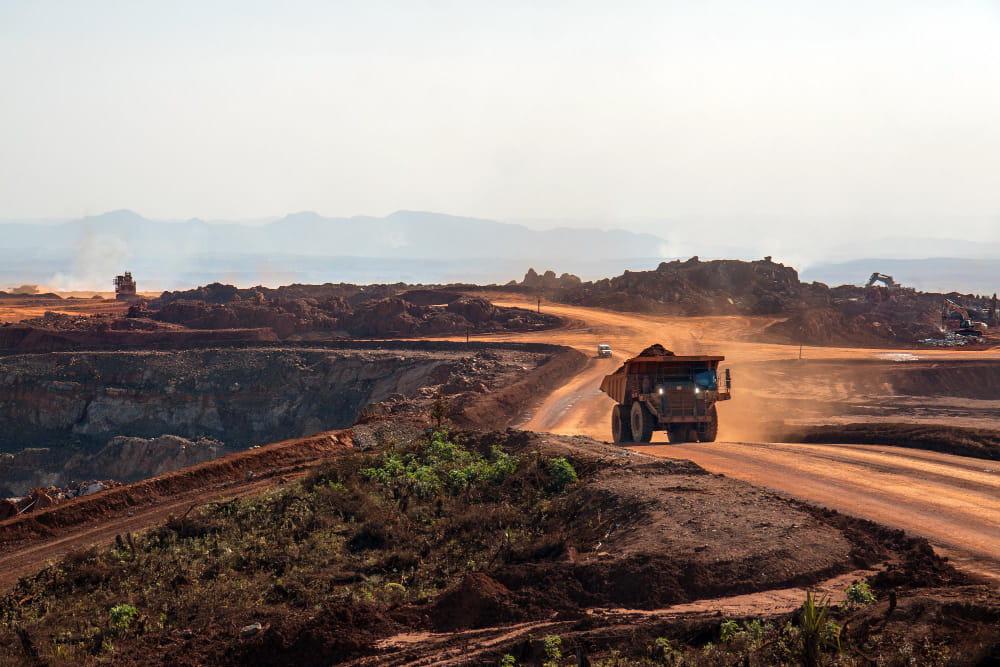
Diamond mining projects may require substantial investment in access roads, power supply, water systems, processing facilities, heavy equipment, worker accommodation, security, and environmental management.
Depending on the deposit, mining methods can include open-pit, underground, alluvial, or marine diamond mining.
Africa also demonstrates how different geological environments create different technical requirements. Marine diamond operations, for example, require specialized offshore equipment, while alluvial operations may depend on different recovery and processing systems.
For investors, mine development therefore creates opportunities not only in extraction but also in engineering, equipment supply, infrastructure, energy, water management, and mining services.
3. Diamond Recovery, Sorting, and Processing
Recovering diamonds from mined material is another critical stage of the value chain.
Processing plants use a combination of physical separation technologies to recover diamond-bearing material. Efficiency at this stage can directly influence project economics because valuable stones must be recovered while minimizing losses.
Investors can participate in the supply of processing equipment, plant engineering, maintenance services, automation, sensors, and recovery technologies.
Digital monitoring can also improve operational visibility by helping mining companies track production performance, equipment utilization, and processing efficiency.
As African mining operations become more technology-driven, specialized mining technology companies can find opportunities alongside traditional mining investors.
4. Diamond Sorting and Valuation
After recovery, diamonds must be sorted and evaluated according to characteristics such as size, shape, color, clarity, and quality.
This stage requires specialized expertise and secure facilities.
Professional sorting and valuation centers can therefore represent an important midstream opportunity. Such facilities may serve mining companies, traders, exporters, manufacturers, and other participants in the diamond market.
Technology can also improve inventory management, documentation, traceability, and transaction security.
For investors, developing specialized diamond service centers can create a business model that is connected to mining without requiring direct ownership of a mine.
5. Cutting and Polishing: Where Value Addition Matters
One of the most important opportunities in the diamond value chain is downstream processing.
Cutting and polishing transform rough diamonds into finished stones that can enter jewelry and other markets. Establishing these activities closer to producing regions can create employment, technical skills, manufacturing capabilities, and additional economic activity.
The International Energy Agency’s analysis of African mineral value chains highlights the broader opportunity for African countries to move beyond extraction toward beneficiation, material production, and manufacturing.
The same principle applies to diamonds. Instead of capturing value primarily through the export of rough stones, producing countries can develop specialized cutting and polishing capabilities.
This requires skilled workers, modern equipment, quality-control systems, secure facilities, training programs, and access to international buyers.
Botswana provides an important example of this value-addition approach. The country’s diamond industry has increasingly focused on downstream activities such as cutting and polishing, creating opportunities beyond the initial extraction stage.
6. Diamond Certification and Traceability
Traceability has become increasingly important in international diamond markets.
Investors and businesses need to understand the regulatory systems governing rough diamond exports and imports. The Kimberley Process Certification Scheme is an international mechanism designed to prevent conflict diamonds from entering the legitimate rough diamond trade. Its participants represent approximately 99.8% of global rough diamond production and trade.
This creates opportunities for businesses specializing in compliance technology, documentation, secure data management, auditing, and supply-chain traceability.
Blockchain and other digital technologies can also support transaction records and supply-chain monitoring, although technology does not replace regulatory compliance or formal certification requirements.
7. Diamond Trading and Export Services
Trading represents another important stage of the diamond value chain.
Once diamonds have been recovered, sorted, valued, and appropriately certified, they can enter domestic or international trading channels.
Trading businesses require market intelligence, buyer networks, financial services, secure transportation, insurance, documentation, and regulatory expertise.
Investors can therefore explore specialized trading-support businesses rather than focusing exclusively on direct mineral extraction.
International connectivity is particularly important because diamond markets are highly dependent on relationships between producing countries, processing centers, manufacturers, wholesalers, and jewelry markets.
8. Logistics and Security Infrastructure
Diamonds are high-value commodities that require specialized logistics and security.
This creates opportunities for secure transportation, vaulting, insurance, customs support, tracking systems, and specialized logistics services.
Mining companies also require conventional logistics for moving equipment, fuel, spare parts, workers, and processed materials.
As diamond-producing regions develop, logistics infrastructure can become an important supporting component of the wider mining ecosystem.
For investors exploring broader African opportunities, the development of mining corridors can also create demand for transport, warehousing, infrastructure, and related services.
Technology Is Reshaping the Diamond Value Chain
Technology is becoming increasingly relevant across the diamond mining value chain.
Exploration companies can use geospatial technologies and advanced data analysis to improve geological targeting. Mining operators can use automation and monitoring systems to improve productivity and safety. Processing facilities can integrate sensors and digital controls, while downstream businesses can use digital inventory and traceability systems.
The broader African mining sector is also examining how technology and beneficiation can help countries capture more value from mineral resources. The IEA identifies mineral processing and technology manufacturing as potential areas for African industrial development beyond extraction.
For investors, this means technology companies can participate in the diamond sector without becoming mining operators themselves.
ESG and Responsible Diamond Mining
Environmental and social considerations are increasingly important when developing diamond projects.
Mining companies need to consider land rehabilitation, water management, energy consumption, biodiversity, worker safety, community engagement, and responsible supply chains.
Responsible mining can also require investment in environmental monitoring, waste management, renewable energy, water treatment, and community development.
These requirements create opportunities for specialized environmental and mining-service companies.
Investors evaluating diamond projects should therefore examine not only geological potential but also environmental obligations, community relationships, regulatory requirements, infrastructure, and long-term closure responsibilities.
Investment Opportunities Across the Diamond Value Chain
The diversity of the diamond value chain allows investors to consider different entry points depending on capital requirements and technical expertise.
Potential opportunities include:
- Diamond exploration and geological services
- Mining equipment and engineering
- Diamond recovery and processing plants
- Sorting and valuation facilities
- Cutting and polishing centers
- Certification and traceability technology
- Secure diamond logistics
- Specialized warehousing and vaulting
- Mining technology and automation
- Environmental and ESG services
- Workforce training for diamond-related industries
This diversified structure allows investors to assess opportunities according to their preferred position in the supply chain rather than treating diamond mining as a single-sector investment.
What Investors Should Assess Before Entering the Market
A diamond investment requires careful due diligence.
Investors should examine the geological quality of the deposit, mining rights, licensing requirements, infrastructure availability, production costs, processing capacity, export regulations, environmental obligations, local-content requirements, and market access.
Supply-chain considerations are equally important. A technically viable mine may still face challenges if transportation, energy, skilled labor, processing facilities, or secure export channels are insufficient.
Investors should also understand the applicable Kimberley Process requirements and national regulations governing the production and international trade of rough diamonds.
A comprehensive market assessment can help determine whether an opportunity is better suited to exploration, mining, processing, downstream manufacturing, logistics, or supporting services.
Why Africa’s Diamond Value Chain Creates Investment Opportunities
Africa’s diamond industry demonstrates how natural resources can support broader industrial development when investment extends beyond extraction.
The value chain connects geological exploration with mining, processing, manufacturing, logistics, technology, professional services, and international trade.
For investors, this creates multiple entry points. Some businesses may focus on upstream mining, while others can capture value through downstream processing or specialized services.
The long-term opportunity is therefore not simply about finding and extracting diamonds. It is about developing an ecosystem that can retain more economic activity within producing countries while connecting African businesses to international markets.
Conclusion: Building Value Beyond Diamond Extraction
The diamond mining value chain in Africa offers investment opportunities across upstream, midstream, and downstream activities.
Exploration, mine development, processing, sorting, cutting and polishing, certification, trading, logistics, technology, and ESG services all contribute to the final value of a diamond.
For international investors, understanding these interconnected stages is essential for identifying suitable projects and evaluating where capital, technology, and expertise can create additional value.
Africa’s diamond sector can therefore be approached not only as a mining opportunity but as a broader industrial ecosystem.
Explore Diamond Mining Investment Opportunities in Africa
Are you evaluating a diamond mining project, processing facility, cutting and polishing operation, mining-service company, or related investment opportunity in Africa?
YES! Invest Africa can support investors with market intelligence, local market entry, institutional liaison, regulatory guidance, project assessment, and connections with relevant local partners.
Explore Africa’s investment opportunities and identify where your capital and expertise can contribute to the continent’s evolving diamond value chain.
Frequently Asked Questions
1. What is the diamond mining value chain?
The diamond mining value chain includes exploration, mine development, extraction, recovery, sorting, valuation, cutting and polishing, certification, trading, logistics, and related services.
2. What are the main investment opportunities in diamond mining?
Investment opportunities can include exploration, mining, processing, cutting and polishing, certification technology, logistics, equipment supply, environmental services, and specialized mining technology.
3. Why is diamond cutting and polishing important?
Cutting and polishing can add value to rough diamonds before they enter jewelry and other downstream markets. Developing these capabilities can also create manufacturing jobs and technical skills in producing countries.
4. What is the Kimberley Process?
The Kimberley Process Certification Scheme is an international framework designed to prevent conflict diamonds from entering the legitimate rough diamond trade. Its participants represent almost all global rough diamond production and trade.
5. What should investors consider before investing in African diamond mining?
Investors should assess geological potential, mining rights, regulations, infrastructure, processing capacity, environmental obligations, supply-chain requirements, market access, security, and applicable diamond-trade certification requirements.
