 Article Writer
Cellular Services Investment in Africa: Strategic Advantage for Singapore, Qatar, and Hong Kong Provider
The global telecommunications industry in 2026 is navigating a critical phase of market saturation across developed economies. As traditional data revenues level off in parts of Europe and Asia, leading institutional asset allocators and multinational operators are shifting their growth capital toward a dynamic digital frontier. Cellular services investment in Africa has emerged as one of the most profitable structural opportunities of the decade. With a population surpassing 1.4 billion people and mobile penetration growing rapidly, the continent represents an unmatched expansion environment.
At Yes! Invest Africa, we analyze these macro-infrastructure trends with absolute data-driven precision. For forward-thinking telecommunications groups in Singapore, Qatar, and Hong Kong, entering the African cellular market is no longer a speculative choiceit is a clear strategic advantage that strengthens global competitiveness. By combining Asia’s extensive financial capital and technical capabilities with Africa’s immense digital demand, this intercontinental partnership is unlocking high-yield, long-term returns.
The Macro Dynamics of Africa’s Growing Cellular Market
The commercial velocity of Africa’s telecom sector is anchored by solid demographic advantages and a universal shift toward digital public infrastructure.
1. Accelerating Mobile Penetration
Mobile adoption across the continent is expanding rapidly, welcoming millions of new cellular subscribers into the digital economy every single year. Major regional powerhouses such as Nigeria, Kenya, and South Africa continue to lead high-volume subscriber growth. Concurrently, immense untapped opportunities remain scattered across West and Central Africa. This structural deficit in legacy connectivity offers international operators an exceptional first-mover advantage to capture market share.
2. Surcharging Demand for High-Speed Internet Access
Africa features one of the most youthful demographics on earth, creating a natural, digital-first consumer base that drives the digital economy. This young population relies heavily on mobile networks to access essential daily services, including online retail, digital learning, and remote workspaces. According to comprehensive digital expansion data tracked by the International Telecommunication Union (ITU), expanding high-speed broadband infrastructure is the most critical requirement to sustain modern economic growth across emerging markets. Telecom providers can capture this long-term loyalty by deploying advanced 4G, 5G, and next-generation wireless networks.
Why Singapore, Qatar, and Hong Kong Providers Benefit
Telecom leaders from these three specific regional hubs possess distinct operational, financial, and technological advantages that match perfectly with Africa’s current development needs.
Singapore: Leveraging Technical Expertise and Smart City Solutions
Singapore’s world-leading telecom providers are highly recognized for their unmatched capabilities in deploying complex network architectures and smart city systems. Deployed across major African metropolitan hubs, Singapore’s technical expertise can drastically optimize spectrum efficiency, lower network downtime, and improve digital public infrastructure, directly supporting the urban frameworks explored in our Smart City Africa Projects: Case Studies overviews.
Qatar: Expanding the Global Telecom Footprint via Capital Scale
Qatari telecommunications conglomerates are actively seeking high-yield international markets to diversify their corporate holdings. Africa provides a vast, rapid-growth telecom environment where Qatari providers can deploy large-scale capital to construct long-term infrastructure, diversify their portfolios, and solidify a dominant global position.
Hong Kong: The Financial Gateway to Asia-Africa Connectivity
Operating as one of the world’s premier financial capitals, Hong Kong excels at structuring complex project finance, syndicating large infrastructure loans, and managing high-volume international trade transactions. Hong Kong telecom groups can seamlessly bundle institutional financing with advanced hardware solutions to gain a powerful competitive edge, flowing in total synergy with the capital models analyzed in our Hong Kong Investment Pathway to Africa profiles.
Key Opportunities in Africa’s Cellular Sector
Capturing premium value along the telecom investment Africa Singapore Qatar Hong Kong corridor requires a targeted focus on high-margin infrastructure and software integrations.
1. Foundational Hardware and Tower Infrastructure
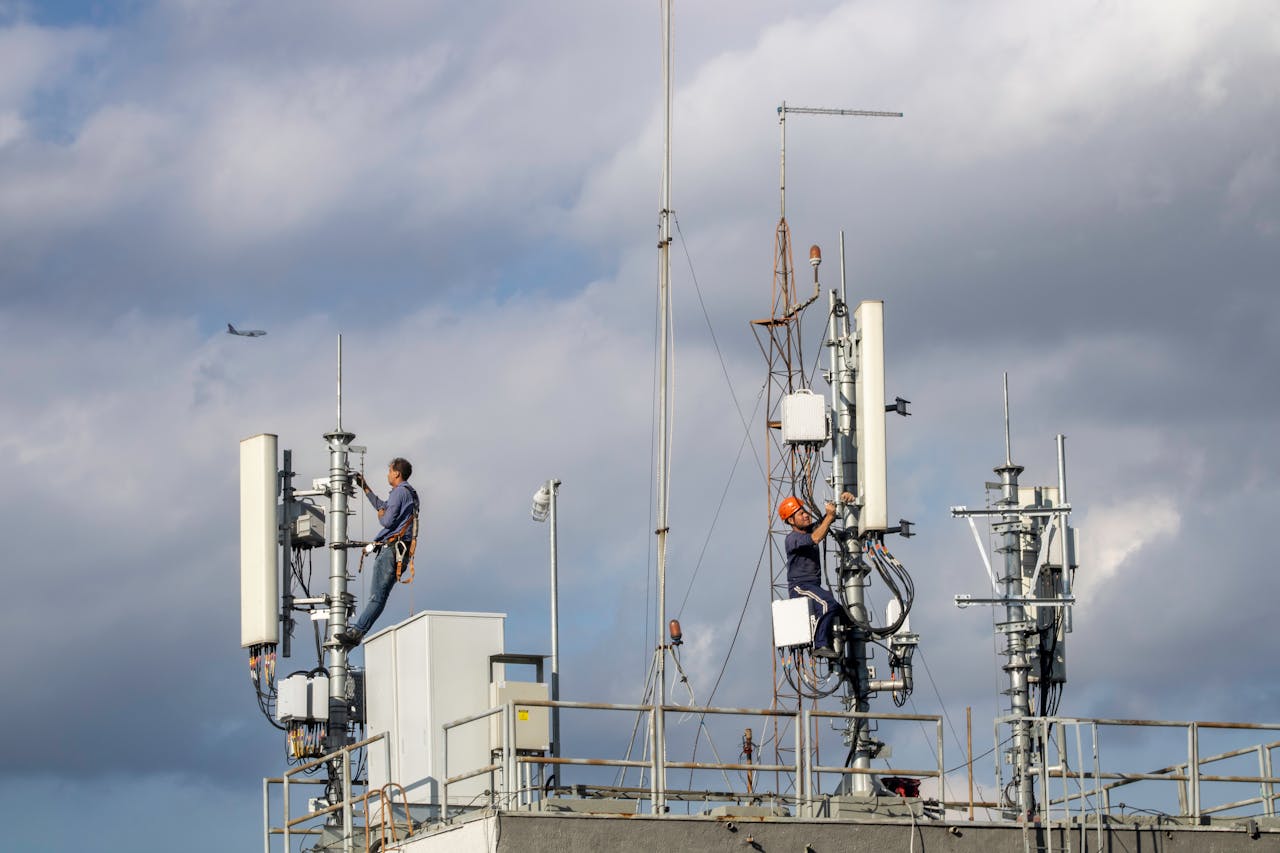
Expanding physical connectivity across both dense urban areas and isolated rural zones requires major investments in cell towers, subsea data links, and cross-border fiber-optic backbones. Constructing these asset-heavy, private infrastructure networks provides a highly stable, toll-like utility revenue stream that is well-insulated from broader market shifts, matching the physical logistics paths explored in our profiles on Logistics Hubs Africa: Trade Facilitation.
2. Deep Mobile Payments and Fintech Integration
Africa is the undisputed global leader in mobile money velocity and transactional volume. Rather than functioning as simple data pipes, modern cellular providers can integrate digital wallets, peer-to-peer payment systems, and micro-insurance tools directly into their subscriber identity modules (SIMs). This convergence unlocks massive secondary revenue streams, running cleanly on the secure architectures updated in our Fintech Regulations Africa: 2026 Updates profiles.
3. Rapid 5G Expansion and Industrial IoT
The continent’s ongoing transition to 5G infrastructure is unlocking a major industrial revolution. High-speed, low-latency 5G networks are essential to support automation across critical sectors, including remote healthtech platforms, digital learning systems, and automated mining setups. Furthermore, 5G-enabled Internet of Things (IoT) sensors are transforming processing efficiencies, aligning perfectly with the business frameworks analyzed in our Agro-Processing Plants Africa: ROI Analysis market reviews.
Challenges, Risk Mitigation, and Portfolio Protection
While the financial rewards of capturing Africa’s digital expansion are immense, navigating these diverse frontier markets requires a sophisticated approach to risk management.
1. Navigating Complex Regulatory Frameworks
Operating across 54 sovereign nations requires strict compliance with varying local telecom licensing laws, data sovereignty mandates, and spectrum allocation policies. Savvy Asian investors protect their corporate interests by executing highly transparent, enforceable contracts and securing robust legal baselines to govern public-private partnerships.
2. Resolving Rural Infrastructure Gaps
Connecting remote rural communities can present geographical and engineering challenges due to local power grid limitations. Forward-thinking telecom operators overcome this hurdle by deploying independent, standalone solar-plus-storage micro-grids directly to fuel their tower networks. This green integration guarantees continuous 24/7 technical uptime, mirroring the clean-energy innovations examined in our core reports on Solar Energy: Africa’s Power Revolution.
3. Managing Macroeconomic and Political Shifts
Fluctuations in local currencies and political changes demand proactive de-risking mechanisms. Global providers insulate their long-term growth by forming strong joint-ventures with trusted local partners, securing comprehensive multi-lateral risk guarantees from global development banks, and anchoring all legal dispute resolutions within recognized international arbitration frameworks.
Frequently Asked Questions (FAQ)
- Why does cellular services investment in Africa benefit Singapore, Qatar, and Hong Kong providers?
Because Africa offers an unmatched, fast-growing consumer base and massive demand for mobile connectivity, data services, and mobile payments, allowing Asian providers to secure a highly lucrative foothold outside of their saturated domestic markets.
- Which specific African countries are most promising for cellular services investment?
Nigeria, Kenya, South Africa, and Egypt stand as the leading mature markets, while nations like Guinea and Tanzania offer immense, untapped opportunities for fresh network deployment.
- How do telecom providers effectively mitigate operational and regulatory risks?
Providers insulate their capital by executing highly enforceable contracts, anchoring concessions in international arbitration boards, partnering with local governments, and using solar micro-grids to bypass local power grid gaps.
- What specific cellular technologies are currently driving the highest market growth?
Primary growth volume is concentrated within extensive 4G rural expansion, urban 5G network rollouts, and the direct integration of mobile payment systems within cellular subscriptions.
- How can Yes! Invest Africa help my firm leverage this telecom boom?
We provide proprietary, ground-level market intelligence, execute rigorous technical, financial, and legal due diligence on concessions, and directly connect Asian institutional investors with fully vetted, bankable African telecom projects.
Connect the Digital Frontier with Yes! Invest Africa
The rapid acceleration of investing in African telecom infrastructure represents the definitive digital narrative of 2026. As the continent builds out the automated networks, 5G towers, and mobile money systems required to sustain modern digital commerce, the window for global operators to capture prime commercial concessions is exceptionally active. These asset-heavy, data-rich digital structures will dictate the flow of continental wealth for the next century.
At Yes! Invest Africa, we perfectly combine extensive local regulatory experience with an elite network of telecom engineers, infrastructure developers, and financial authorities to ensure your firm’s growth capital is deployed securely, legally, and with optimal yield consistency. Whether your portfolio requires direct positioning in automated tower networks, equity in integrated mobile payment syndicates, or exposure to hyper-scale data centers, our sector analysts are ready to guide you to clear market leadership.