 Developer Developer
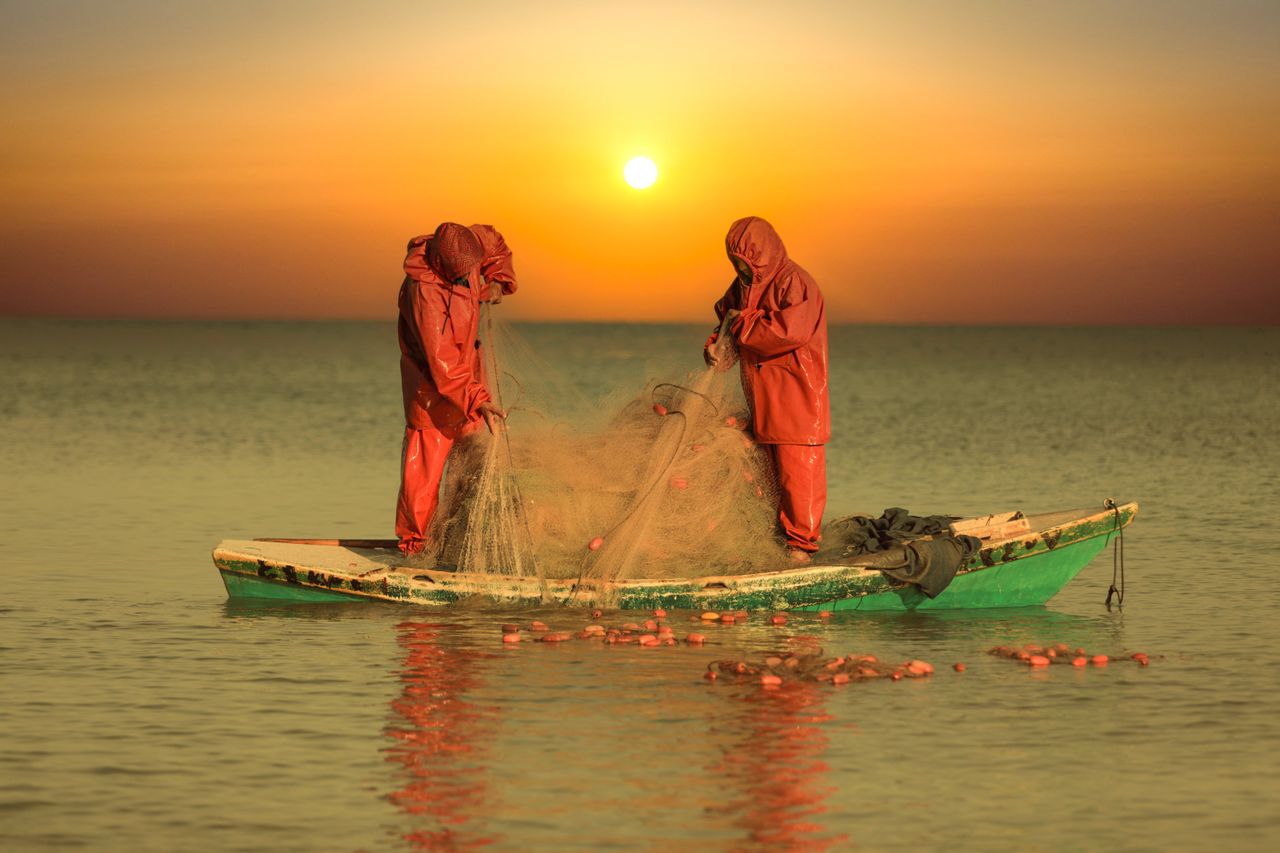
Fish accounts for as much as half of everything Mauritania sells to the rest of the world, yet the sector rarely appears in mainstream conversations about African investment opportunity. With export values between 35 and 50 percent of the country’s total trade, a European Union partnership worth over €60 million annually, and fresh World Bank financing specifically targeting coastal blue economy development, Mauritania’s fisheries sector is one of the most quietly significant, and most underexplored, natural resource opportunities on the African continent. For investors who have spent years chasing Africa’s mining and energy headlines, Mauritania’s 754-kilometer Atlantic coastline offers a genuinely different kind of asset class, and one the data suggests is being systematically overlooked.
Understanding the Scale of Mauritania’s Fishing Economy
Before evaluating investment opportunity, it is worth understanding just how central fishing has been to Mauritania’s economic development, and how that role has evolved over time.
A Sector That Has Anchored Export Revenue for Decades
According to research on the fishing industry’s contribution to Mauritania’s economic development, the fishing sector has accounted for between 35 and 50 percent of Mauritania’s total export value in recent years, citing World Bank data. This is not a new phenomenon. Fisheries contributed 60 percent of the country’s export earnings as far back as 1980, rising to 68 percent by 1988, underscoring just how long fish has served as the backbone of Mauritania’s foreign exchange earnings. In 2023, Mauritania’s total exports were valued at $4.94 billion, with fisheries representing a major component of that figure, according to Central Intelligence Agency data cited in the same research.
Where Mauritania’s Fish Actually Goes
Mauritania’s primary export markets for fish products are Europe, notably Spain, alongside Japan and China, according to UNCTAD trade data. Critically, the same research notes that a substantial portion of the catch is exported directly, often without being processed locally, with some fish products processed in Spain before being re-exported to other markets, including the United States. This detail matters enormously for investors: it means a significant share of the value-added processing currently generated by Mauritanian fish happens outside Mauritania itself, in Spanish processing facilities rather than domestic ones, precisely the kind of value-chain gap that has created substantial investment opportunity in other African commodity sectors.
The EU-Mauritania Fisheries Partnership: A Formal Financial Anchor
Mauritania’s fishing sector benefits from one of the most substantial and long-running international fisheries partnerships on the African continent, providing both direct financing and a stable institutional framework for foreign investment.
A Six-Year Agreement Backed by Serious Capital
According to the European Commission’s official documentation of its fisheries partnership with Mauritania, the Sustainable Fisheries Partnership Agreement between the EU and Mauritania was signed and took effect on 15 November 2021, running for six years with automatic renewal, and covering a current protocol period through 14 November 2026. Under this agreement, the EU contributes €60.8 million per year, with an average of €3.3 million annually specifically dedicated to supporting the sustainable development of Mauritania’s fisheries policy. In exchange, vessels from ten EU member states, including France, Spain, Portugal, Germany, and Italy, gain access to fish for shrimp, demersal fish, tuna, and small pelagic species in Mauritanian waters, for a total of up to 280,050 tonnes annually.
A Framework Built Around Sustainability, Not Just Access
This is not simply an access-for-payment arrangement. The current protocol was negotiated during a period of genuine reform in Mauritania’s fisheries management, incorporating priorities from the country’s national sectoral strategy and specifically aiming to minimize the impact of fishing on marine ecosystems while protecting the activities of Mauritania’s own coastal and artisanal fishing fleets. For investors, this signals a regulatory environment increasingly oriented toward long-term resource sustainability rather than short-term extraction, a meaningful consideration for capital seeking durable, multi-decade positions in the sector.
Fresh Capital Is Now Flowing Into Mauritania’s Blue Economy
Beyond the established EU partnership, Mauritania has recently become a direct beneficiary of a major new multilateral blue economy financing initiative, signaling growing international institutional confidence in the sector’s broader development potential.
A New $240 Million World Bank Programme
According to African Leadership Magazine’s coverage of Africa’s expanding blue economy, the World Bank approved $240 million in March 2026 for the first phase of the West Africa Coastal Areas Blue Economy and Resilience Programme, with the initiative’s first phase specifically covering Benin and Mauritania. The programme is explicitly designed to strengthen blue economy value chains while helping protect vulnerable coastal communities, positioning Mauritania among a small first cohort of countries receiving this kind of dedicated regional blue economy financing rather than generic fisheries support.
Broader Regional Momentum Reinforces the Opportunity
Mauritania’s inclusion in this financing wave fits within a broader pattern of accelerating blue economy investment across the continent. A separate $9.2 million African Development Bank-funded programme spanning 16 Southern African Development Community countries generated cross-border fish trade exceeding 500,000 tonnes over four years, while supporting jobs, food security, and climate resilience, demonstrating how stronger regional fisheries systems can convert aquatic resources into genuine engines of cross-border commerce. Europe’s own institutional engagement with African blue economy development continues to deepen as well, with the fourth edition of BlueInvest Africa scheduled for Cape Town in November 2026, an initiative launched by the European Commission in 2022 specifically to connect African blue economy entrepreneurs with international investors across fisheries, aquaculture, marine technology, and coastal tourism.
Where the Investment Gap, and the Opportunity, Actually Sits
Understanding exactly where Mauritania’s fishing sector remains underdeveloped is essential to identifying where private capital can generate the strongest returns.
Domestic Processing Remains the Clearest Opportunity
The most significant gap in Mauritania’s fishing economy is the same gap that recurs across African commodity sectors: too much value leaves the country unprocessed. With a substantial share of Mauritanian catch currently exported raw, and meaningful volumes processed in Spain rather than domestically, investment in local processing, freezing, and packaging infrastructure represents the single most quantifiable opportunity in the sector. Modern industrial processing complexes equipped with state-of-the-art freezing technology are already emerging in Mauritania, enabling the country to meet international standards for fish exports and enhancing product quality and global competitiveness, but capacity remains far below what the country’s total catch volume could support.
Renewable Energy Integration in Artisanal Fisheries
A distinctive and comparatively underexplored opportunity lies in decentralized renewable energy solutions for Mauritania’s artisanal fisheries sub-sector. The sector has traditionally relied heavily on fossil fuels, undermining profitability for small-scale fishers while increasing greenhouse gas emissions. Investment in solar-powered cold storage, ice-making facilities, and vessel technology tailored to artisanal fishing communities offers a genuinely differentiated entry point, one that improves both the economics and the environmental footprint of Mauritania’s traditional fishing fleet simultaneously.
Value-Added Export Infrastructure and Logistics
As Mauritania continues to develop under its EU partnership and new World Bank blue economy financing, storage, cold chain logistics, and export handling infrastructure connecting coastal processing facilities to international shipping routes represent a growing and increasingly well-supported investment category, particularly as the country works to capture more of the processing value currently flowing to Spanish facilities instead.
Where the Investment Opportunities Are Concentrated
For investors evaluating Mauritania’s fishing and blue economy sector, four categories currently stand out as the most commercially compelling entry points.
- Domestic fish processing and freezing infrastructure. Capturing the processing value currently lost to raw exports and to Spanish processors represents the clearest, most quantifiable opportunity in the sector.
- Renewable-powered artisanal fisheries infrastructure. Solar-powered cold storage and ice-making facilities address a genuine gap in an underserved but economically vital segment of the fishing economy.
- Aquaculture development. As broader African blue economy financing increasingly prioritizes aquaculture alongside wild-catch fisheries, Mauritania’s coastal geography offers meaningful potential for diversification beyond traditional capture fishing.
- Cold chain and export logistics. Infrastructure connecting Mauritania’s coastal processing facilities to international shipping routes stands to benefit directly from both EU partnership financing and new World Bank blue economy capital.
Yes! Invest Africa connects investors to this pipeline through its Regions and Countries hub for West Africa, providing access to commercially verified opportunities across Mauritania’s fishing, mining, and broader natural resource sectors.
Why Mauritania’s Blue Economy Remains Genuinely Underrated
Mauritania’s fishing sector checks nearly every box investors typically look for in a natural resource opportunity: a resource base substantial enough to anchor a third to half of national export revenue, a stable, well-financed international partnership framework through the EU, fresh multilateral capital through the World Bank’s new blue economy programme, and a clearly identifiable processing gap offering a concrete path to higher returns. Yet the sector remains largely absent from mainstream conversations about African investment, overshadowed by more heavily publicized mining and energy opportunities across the continent. For investors willing to look past that visibility gap, Mauritania’s coastline offers precisely the kind of underexplored, fundamentally sound opportunity that tends not to remain overlooked indefinitely.
Frequently Asked Questions
1. How important is fishing to Mauritania’s economy?
Fishing has accounted for between 35 and 50 percent of Mauritania’s total export value in recent years, and has historically been even more dominant, contributing as much as 68 percent of export earnings in the late 1980s.
2. What is the EU-Mauritania Sustainable Fisheries Partnership Agreement?
It is a six-year agreement, currently running through November 2026, under which the European Union contributes €60.8 million annually in exchange for EU vessel access to Mauritanian waters, while also funding sustainable fisheries policy development within the country.
3. Is Mauritania receiving new international investment in its blue economy?
Yes. The World Bank approved $240 million in March 2026 for the first phase of the West Africa Coastal Areas Blue Economy and Resilience Programme, with Mauritania included among the initial countries covered.
4. What is the biggest investment gap in Mauritania’s fishing sector?
Domestic processing capacity. A significant share of Mauritania’s catch is currently exported raw or processed abroad, particularly in Spain, rather than being processed domestically, representing the clearest opportunity for investors to capture additional value.
5. How can foreign investors enter Mauritania’s fishing and blue economy sector?
Most investors enter through direct investment in processing and cold chain infrastructure, joint ventures with local fishing operators, or by working with an investment facilitation partner that provides due diligence, regulatory guidance, and introductions to vetted local stakeholders.
Discover Mauritania’s Overlooked Blue Economy Opportunity
Mauritania’s fishing sector combines substantial scale, stable international financing, and a clear, quantifiable processing gap, exactly the combination of factors that tends to precede a genuine investment re-rating. Investors who move before this underrated asset receives broader market attention are positioned to capture returns from one of West Africa’s most consistently overlooked natural resource sectors.
Yes! Invest Africa connects institutional investors, private equity firms, and high-net-worth individuals with commercially verified fishing and blue economy opportunities across Mauritania and all five African regions. Request your free consultation today and let our team guide you from sector selection to market entry.